
John Deere’s test site hones cutting-edge autonomous farm equipment
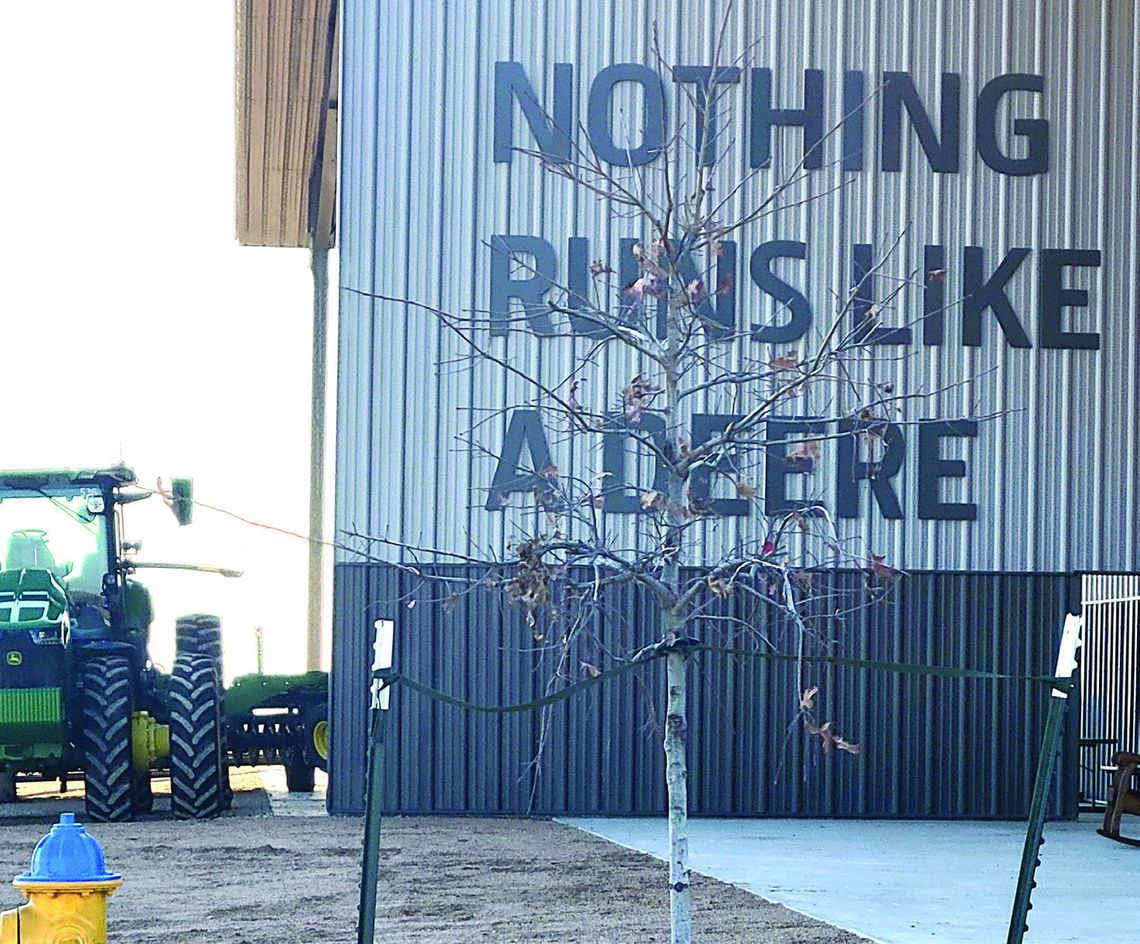
COUPLAND — Atop a sun-drenched hill at the city’s edge sits a two-story metal building bearing the leaping-deer logo and slogan “Nothing Runs Like a Deere” familiar to every farmer and suburban lawn-mower jockey across the nation.
The building, garages and the 285 acres around them make up John Deere Research & Development-Austin on Texas 95 just south of town.
The East Williamson County test farm complements Deere & Co.’s technology hub open on Austin’s South Congress Avenue since 2022.
The 188-year-old company based in Moline, Ill., was drawn to Austin for the tech talent and Central Texas weather that lets the engineers and operators assess equipment year-round. They started with 40 acres in a now-relocated farmhouse and formally established the test center in 2025.
Testing at the site includes smart equipment such as self-driving farm tractors used for seeding, tilling and other agricultural functions. Deere’s artificial intelligence-driven systems also include its See & Spray technology that only sprays pesticide when an unwanted variety of weed is detected to drastically reduce the use of weed-eradicating substances.
When the software needs even more real-world testing on crops, the equipment is loaned to the 2,700-acre experimental Stiles Farm Foundation in Thrall.
“They want to make sure the latest version of their software works on their equipment. We run it in real-world scenarios and then give them feedback,” said Ryan Collett, farm manager at the Stiles Farm Foundation operated by the Texas A&M AgriLife Extension Service.
John Deere autonomous equipment tested at Stiles Farm includes planters, tractors and tillage equipment.
“We’ve gotten to use a variety of stuff that we wouldn’t have been able to if we had to buy it ourselves,” Collett said.
Attempts to contact Deere public relations to arrange an interview with company officials went unanswered for weeks until an outside public relations contractor replied and said, “After reviewing the opportunity, the team has decided to pass on this one.”
FARMING GOES HIGH TECH
Sarah Wurden, an engineer working on a computer application that allows Deere tractors to analyze data collected in the field, said in an article on the company website she hadn’t realized how much of a tech concern John Deere was until she gravitated to their booth at a recruiting event.
“We help customers visualize the vast amounts of data that their machines collect so they can see what worked, what didn’t and make smarter decisions for next year’s crops,” Wurden told the company publication.
Even as a software developer, she said the hands-on experiences with the farm equipment utilizing the app has been a favorite part of the job.
One of the features for the fully autonomous tractor being tested in Coupland is “if the machine finds an obstacle in the field, it snaps a photo, marks the spot on the map, and sends it to the farmer before routing around the obstacle,” Wurden said. “Seeing that technology in action and realizing how it can evolve through further innovation while also appreciating its potential impact on the future of farming is just incredible.”
MAKING A SPLASH
The company made a splash in January 2025 at the Consumer Electronics Show in Las Vegas with several autonomous innovations in farm equipment, heavy construction machinery and even riding lawn mowers.
The challenges of finding skilled labor and creating more efficiency in farming are what drives innovation in the field, according to company officials.
“Our agriculture, construction and commercial landscaping customers all have work that must get done at certain times of the day and year, yet there is not enough available and skilled labor to do the work,” said Jahmy Hindman, chief technology officer at Deere, in a written statement ahead of last year’s CES. “Autonomy can help address this challenge.”
He added, “That’s why we’re extending our technology stack to enable more machines to operate safely and autonomously in unique and complex environments. This will not only benefit our customers, but all of us who rely on them to provide the food, fuel, fiber, infrastructure and landscaping care that we depend on every day.”
The Autonomous 9RX tractor for large-scale agriculture has been an attention getter for the company with customers. It features 16 individual cameras for a 360-degree view of the field so “farmers can step away from the machine and focus their time on other important jobs,” according to the company description.
The tractor has an advanced autonomy kit that calculates the tillage depth with more accuracy over long distances. That means it can pull more equipment and drive faster in the field.
It is unclear if the 9RX is one of the pieces of equipment tested in Coupland.
While farm operators can buy the latest autonomous tractors from the dealer, the company has kits that can upgrade existing equipment.
Another piece of Deere technology tested at the farm is AutoTrac, an autonomous tool that takes the wheel, cuts down on operator fatigue, prevents the tractor from going over the same land again and unnecessarily compacting the soil.
An arial photo of the Coupland test farm on the Deere website shows numerous pieces of equipment there to go through their paces.
The company touts collaborative efforts with area farmers from the dealer to the field. The site bridges the gap between fieldwork and strategy, test site manager Kyle Leinaar said in a Deere website article in September.
“It’s where boots-on-the-ground insights meet enterprise-wide innovation,” Leinaar said.
The selection of the site focused on the balance of “rural access and urban convenience” along with the ability to test throughout the year.
“Thanks to Texas’ early seasons, the team is planting corn in February before the Midwest even thaws,” according to the company.
In just a few years, the research and development center has mapped more than 20,000 acres with local farmers, Leinaar said.
“We have had opportunities to test with farmers running a mixed fleet and expose them to the advantages of our full tech stack,” he said. “When farmers found out John Deere was moving in, there was confusion but also excitement.”
We run it in real-world scenarios and then give them feedback.”
— RYAN COLLETT, STILES FARM FOUNDATION
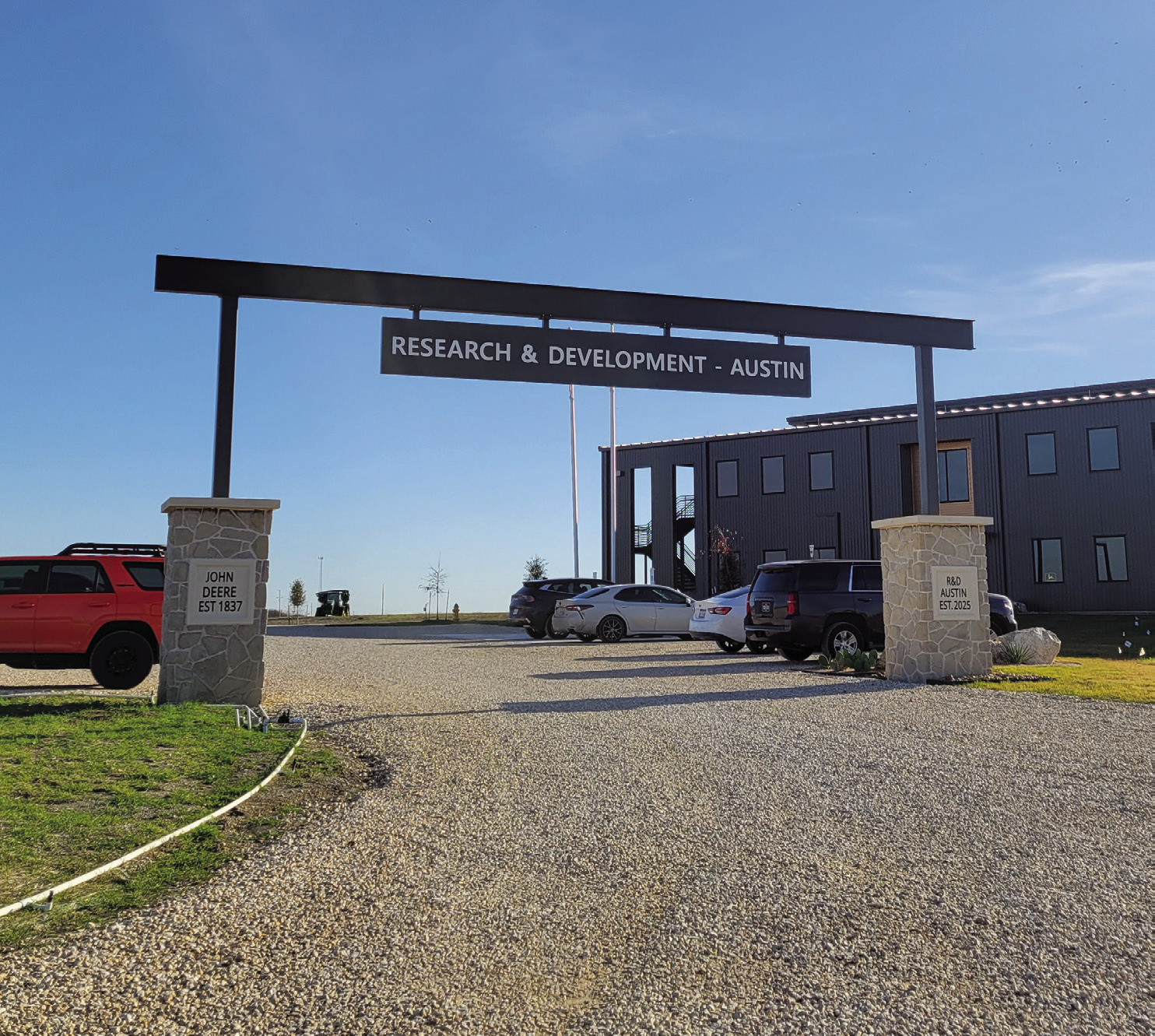
Autonomous farm equipment gets tested at this site in Coupland. PHOTO BY TRAVIS E. POLING


Comment
Comments