
Railways bring opportunity and challenges
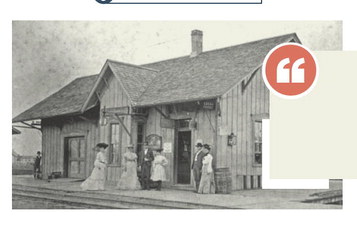
In 1876 the International-Great Northern Railroad steamed into Williamson County and established depots not far from Austin that would become the cities of Taylor and Hutto.
Now, 150 years later, both municipalities are commemorating the importance of the railroad in 2026 with sesquicentennial celebrations.
Yet at the same, the railroads that created an economic boon for East Wilco in the 19th century — while still vital — pose plenty of challenges for the fast-growing county in the 21st century as the population expands, roads are built to accommodate more autos and new industries locate to the region, officials said.
“We as citizens can complain about blocking the crossings or the long permitting and approval processes, but we also know that trying to get any changes made from (Union Pacific Railroad) is a battle … Don’t expect to win the fight,” said Scott Murrah, an engineer whose local projects have faced delays from Union Pacific.
Union Pacific officials declined to comment directly for the story, but did send this response: “Communities developing projects on or near Union Pacific right of way can start the process by reaching out to our public projects team on our website, where you can find detailed information on how the process works.”
The railroad provided this link: www. up.com/communities/public-projects.
According to local historians, without the railroad Hutto, Taylor and many other Central Texas towns might not exist.
“We had several pioneer families around here and about all they could do was survive. But when the railroad came it meant you could be a farmer and you could grow something like cotton and get it to market,” said Don Doss, a member of the Williamson County Historic Commission.
Doss added, “That made it possible for a lot of people to make money and raise a family and build a house and that was very viable for a long time.”
The railroad connected Williamson County to the rest of the United States and the Port of Houston, igniting a boom in the cotton industry. In the early 1900s, Doss said, the county was the secondlargest producer of cotton in Texas and the state was the largest producer of cotton in the world.
Houston shipped more cotton than any other port on the planet.
“Without the railroads, Williamson County could have been like a lot of the counties you see now in East Texas where they only have small rural towns and no real industrial growth ... at least until Austin grew up,” Doss said.
A MIXED BLESSING
In the 21st century, the local tracks are now owned and operated by Union Pacific. BNSF Railway has trackage rights on the UP rails through the area. There is also an Amtrak stop in Taylor for passenger transport.
Cotton is no longer the economic driver for east Williamson County, but freight trains still run the rails through the cities. While the towns initially relied on the railroad for survival, in 2026 the rails are a mixed blessing for the growing communities, according to some local leaders.
HUTTOAND EMERGENCY PLANNING
In Hutto, where the train tracks bisect the city as they run parallel to U.S. 79, the train affects all parts of life from the daily commute to school to transportation and logistics for first responders. The tracks cross several major intersections and have an impact on 79, a main transportation artery through the city.
An average of 15 trains pass through Hutto each day.
“In a fast-growing district like (the) Hutto Independent School District, rail lines don’t just mark history—they actively shape the present. They influence where schools can be built, how students are transported safely, and how long students spend on the bus,” said Hutto ISD board Chairwoman Amy English.
English said district buses cross the railroad tracks more than 40,000 times a year. By law, the transport vehicles must stop at every railroad crossing. Hutto ISD is working to secure a secondary transportation hub on the other side of the tracks from the current facility that will cut the number of railroad crossings nearly in half.
In addition to the inconvenience of adding to travel time, waiting for a train to pass could have disastrous results during an emergency.
Police Chief Jeffrey Yarbrough said his department works to keep patrol officers available in different sectors of the city so residents aren’t waiting on a response when patrol cars are stuck at crossings.
Hutto Fire Rescue has stations on both sides of the tracks to get crews to scenes faster.
The railroad presents unique hazards that require specialized planning and training.
“The railroad running through Hutto is an important factor in how Hutto Fire Rescue plans and delivers emergency services. Trains can occasionally block crossings, which could potentially delay response times,” said spokeswoman Cassie Balderas. “Having four strategically located stations throughout our service area ensures that emergency resources can reach calls from multiple directions, even when trains are present.”
According to Balderas, fire crews coordinate efforts with other Williamson County agencies and regularly train for a range of incidents that could occur along the tracks, including derailment of cars carrying passengers, hazardous-materials shipments and other unknown cargos.
The department responded to three railroad crossing accidents in 2024 and one in 2025.
Overall, there were 40 reported incidents or accidents from 2021-2025 with four fatalities in Williamson County, according to the U.S. Department of Transportation.
LONG DELAYS IN THRALL
Trains are regulated by federal law, and there are no state laws that limit how long a stopped train can block an intersection. Trains have been known to block the two crossings in Thrall for more than an hour at a time, cutting off access between 79 and the schools, forcing buses, parents and other commuters to find alternate routes miles out of their way, according to residents and officials.
GRANGERAND
THE WATERLINE WOES
In Granger, trains frequently block the tracks for up to 30 minutes at a time but on rare occasions the three crossings have been rendered impassable for days, according to Murrah, president of 5M Associates, a firm that has worked with Granger and several other cities in Williamson County.
“We do understand the importance of the railroad and its effect on our surrounding economy, but the Granger community does not benefit directly from the railroad’s presence,” Murrah said.
Granger is divided in half by the railroad, which follows Texas 95. The city has two parallel tracks through town and is used as a passing zone for northbound and southbound trains.
Murrah said the close proximity of the crossings usually means that all three are blocked when one train has to wait for an oncoming train.
While freight trains can move fast, Union Pacific can be a slow-moving bureaucracy, Granger officials said.
Getting approval to go under or over the tracks can add months and in some cases years to a project.
In Granger, Murrah’s company ran into delays while installing a new water line that crossed under the tracks. The holdup kept the Granger Secondary School from opening until March due to a lack of accessible water.
“The permit for the bore under the railroad cost the city about $17,000 and took about three months for approval ... this was just to get permission to bore under the railroad,” Murrah said.
When the drilling hit an unexpected snag and a second hole bored into groundwater, UP halted all operations and required the city to hire a geotechnical engineering firm to perform groundpenetrating radar services.
The revised drawings took four months to complete and another three months to receive UP approval.
Murrah believes it might have taken even longer for the railroad company to approve the revised permit, but Mayor Bruce Waggoner contacted District 52 state Rep. Caroline Harris Davila and her office made inquiries with Union Pacific.
He believes her support helped speed the process by several months.
“For small cities like Granger, the (Union Pacific Railroad) is the 800-pound gorilla that the city has to live with,” Murrah said.
EASTWILCOHIGHWAY
Granger hasn’t been the only government entity to call on state or U.S. leaders for help when working with Union Pacific.
In September 2024, Williamson County Precinct 4 Commissioner Russ Boles faced delays on a pair of bridges crossing over the tracks on FM 3349 as part of the East Wilco Highway.
For many long months drivers traveling on 79 between Hutto and Taylor saw the skeletons of unfinished bridges with no work being done because the permit to cross the tracks had not been approved.
With the project already behind, Boles said he received a message from the railroad company the permit needed to pass by yet another department that would potentially delay construction another three months.
Boles reached out to Congressman Pete Sessions, who interceded with Union Pacific. Boles had the permit in hand within two weeks.
ECONOMICADVANTAGES
While railroads may cause issues with development, in other cases they give small cities special economic advantages, officials said.
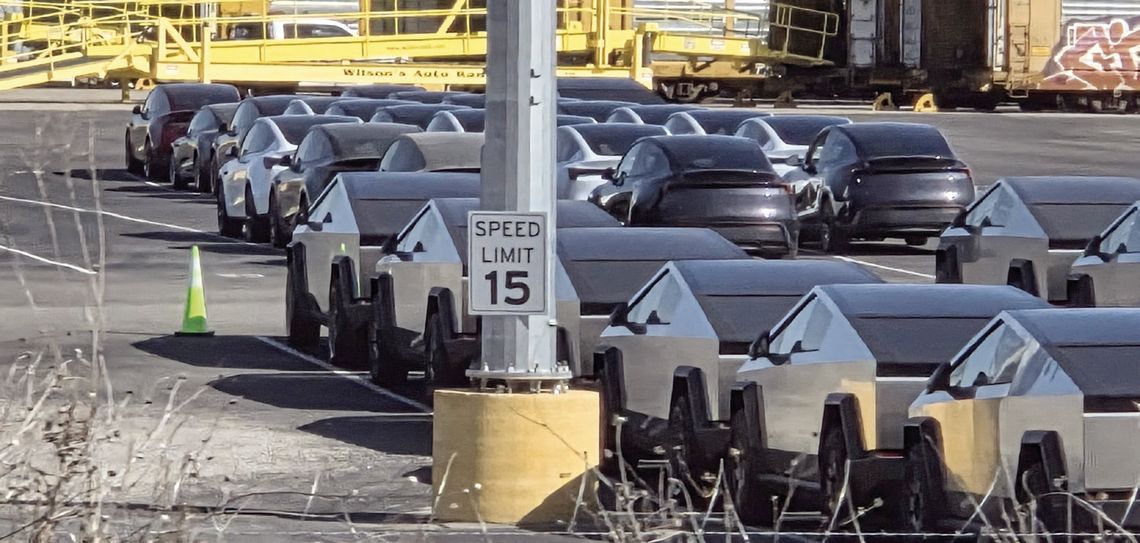
The RCR Taylor Logistics Park at 79 and FM 3349 is a rail yard served by both UP and BNSR. It is situated with easy access to Samsung Austin Semiconductor and industrial sites in both Taylor and Hutto. It is also a main shipping hub for Tesla, which has leased a facility within the park for transporting its Model Y vehicles and Cybertrucks.
Officials with the Taylor Economic Development Corp. consider the facility a strategic asset.
“As the only rail-served port facility in Central Texas, Taylor is uniquely positioned to attract and support a diverse range of industries that rely on rail for the efficient movement of raw materials and finished goods,” said Ben White, CEO/President of the EDC. “This competitive advantage enhances our ability to recruit manufacturers, logistics providers and distribution operations that depend on reliable freight rail service— bringing quality jobs and (an) expanded tax base to our community.”
In addition, White said the Amtrak station in Taylor adds to the city’s options, allowing the town to leverage both freight- and passenger-rail assets for industry and community development.
RAILROADS AND A TRAVELING EXHIBIT
Taylor will celebrate its rail-based history during its sesquicentennial year with a visit from the Smithsonian’s Museum on Main Street traveling exhibit – “Spark! Places of Innovation.”
The traveling exhibit will be in town from Aug. 15 to Sept. 27.
Taylor is the only city in Williamson County to host the showcase this year.
The event was created to explore “the unique combination of places, people, and circumstances that sparks innovation in invention” in rural communities, according to organizers.
“Taylor’s addition to the exhibit will highlight the region’s close ties to the railroad, cotton and incoming tech industry – along with local art, stories and historic vehicles,” said Taylor Special Events Coordinator Ruby Fisher. “Our hope is that folks leave the exhibit with the story of Taylor.”
More details are pending.

Comment
Comments