
GEORGETOWN — Young adults 1724 years old make up only about 10% of the U.S. population, but they account for about one-third of all arrests nationwide.

Three out of four of these young offenders return to the criminal-justice system within three years.
Williamson County officials are trying to reverse that trend.
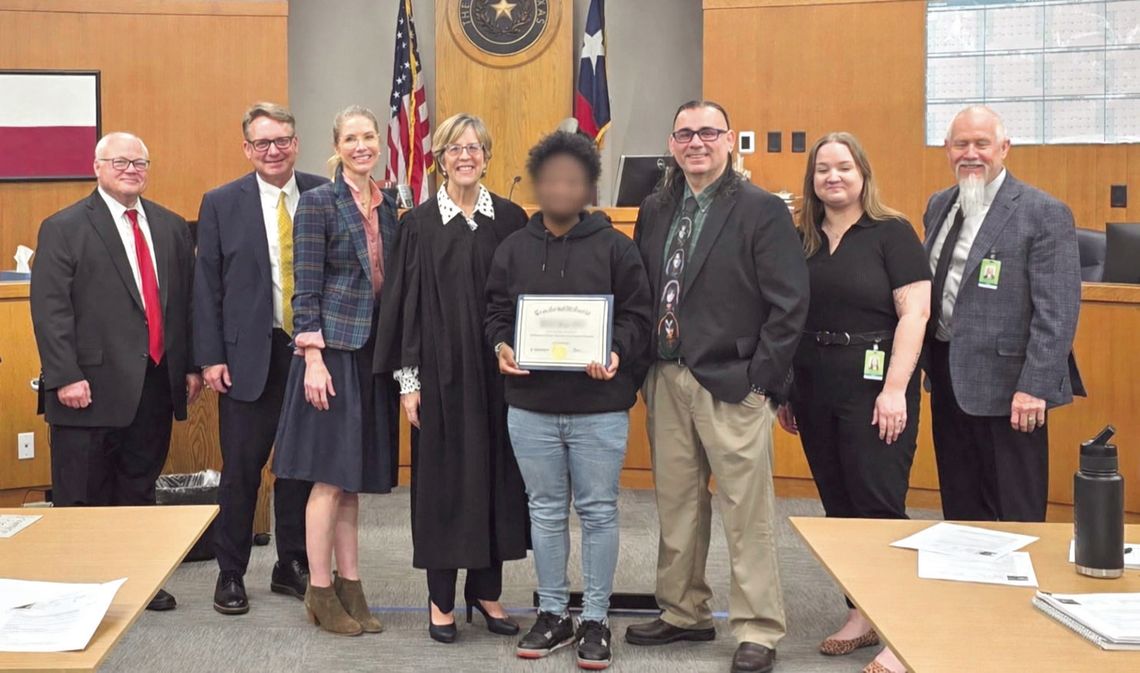
The Transformative Justice Program, hailed as “unique” among criminaljustice professionals, is giving young-adult offenders a second chance at redemption and a productive life instead of a cell and a cot.
“If you had a school and you only succeeded with 25% of the students, you wouldn’t keep doing the same thing, but that’s what the criminal-justice system has been doing for decades,” said District Attorney Shawn Dick.

About 10 years ago, Elizabeth Henneke, founder and chief executive officer of the Lone Star Justice Alliance, proposed the idea of the Transformative Justice Program to Dick and 277th state District Court Judge Stacey Mathews, whose docket includes cases involving juveniles, or those 16 and under charged with a crime.
Dick and Mathews both agreed the system needed to change and decided the change would start with them.
Mathews and prosecutor Stephen Hesse noted the county already had a strong diversion program for juvenile offenders, but those slightly older were falling through the cracks of the justice system.
“It seemed to me that if we extended that (youth program) into young adulthood and provided some of the same services that we were able to give to juveniles … we would reduce criminality and recidivism,” Hesse said.
Dick and Mathews spent several years gathering all the key partners and components to create a program.
One piece of this multifaceted puzzle included extensive research. To receive state funding, the Legislature wanted data, but Mathews said there was none at the time.
“There had never been any randomized controlled study in the criminal-justice system that we’re aware of or that our researchers were aware of,” Mathews said.
The judge compared the research they needed to that of medical trials. They had to receive approval from ethics boards and program participants had to sign consent forms.
“It was a very interesting process because it’s humans we’re looking at and that’s what makes this work so critical,” Mathews said.
Georges Naufal and Emily Naiser from the Texas A&M University’s Public Policy Research Institute became involved with the TJ project in 2018.
The data-collection period began in earnest in November 2020. From 2018 to 2020, Naufal said they had to determine what research design was feasible for project evaluation, what data existed, how the program would function and how outcomes would be captured.
Initially, Dallas County was also in the study as officials there attempted a similar program, but due to a lack of funding and other resources they dropped out.
“The TJ program is complex. It’s not easy to set up and manage,” Naufal said. “Building successful programs like this one relies on a variety of community services and committed stakeholders.”
Naiser added, “The Transformative Justice Program in Williamson County has proven to be quite unique.”
Participants must be nonviolent felony offenders, but TJ is not a one-size-fits-all rehabilitation program. The goal is much larger and broader than that.
“It’s teaching these youth about accountability, about their role in our community, about how to be a productive member of society, but it’s also about giving them an individualized treatment plan so that they have the tools they need to succeed in life,” Dick said.
Some of the tools include mental health and drug counseling, parenting classes for those participants with children and life skills such as resume building, budgeting and furthering their education.
It is a requirement that participants have their general education diploma before they can graduate from the program.
“And then we really require them to do something else. Like attending Austin Community College or training and certification programs,” Dick said. “Why would a program like ours settle for anything less? These kids should be encouraged to go to trade school, go to college, go to graduate school. The whole world is still in front of them.”
From the first day, Dick said TJ case managers and lawyers work to get these young adults invested in their future.
HOWITWORKS;NOTEASY
Transformative justice works faster than the standard criminal-justice system, authorities said. Once offenders decide to participate in the program, many remain in jail less than one day.
“There’s research about how every day, every hour somebody is sitting in jail negatively affects lives,” said Jo Poenitzsch, an attorney at the TJ facility.
Once the paperwork is signed, the offender receives an immediate personal recognizance bond to get out of jail, then they promptly meet with someone from the program.
Poenitzsch pointed out in the regular criminal-justice system offenders who bond out can hire legal counsel or get a court-appointed attorney, but they may not meet with their lawyer that day and they will not have a court date for a month or more.
Some of the young adults do “moan” about the amount of work and length of time the TJ program takes, but “I remind them that regular probation is a minimum of three years,” Poenitzsch said.

Dick acknowledged TJ isn’t easy. It involves three different phases and takes 10-18 months to complete.
“It’s a lot of work, but if you can get an emerging adult to think long-term, the results for their life are night and day,” he said.
In phase one, current needs and immediate challenges are evaluated and addressed, such as mental-health issues and substance-abuse problems.
Unlike many other programs, a substance-abuse relapse is not an immediate dismissal from TJ.
Case manager Marc Ruiz said, “We expect them to have a relapse and have those issues. That’s why we have the counseling. That’s why we have the substance-abuse program that we’ve got.”
Ruiz said the program also uses a relapse as a chance for accountability, allowing the young adult to be honest.
“When they realize they’re not going back to jail, they have more ‘buy’ into the program,” Ruiz said That leads to phase two, the step toward positive change in outlook and direction.
During phase three, participants focus on the growth they have made and look outward toward helping others in their community.
The program teaches the emerging adults that they are also accountable to their community.
“They have to give something back,” Mathews said.
Before the program’s introduction, the arrested young adults posed a risk to society and to themselves, the district attorney said.
“These youth that were coming out of the justice system were harming themselves and the community,” Dick said. “They were becoming a burden and a drain on our society and tax base.”
Now, they are learning the benefit of community service, but TJ participants will not be out on the side of the road picking up trash—unless they want to.
Mathews said the program does not want to dole out service hours to fill up time but offer something that gets the young adults interested and actively engaged in looking beyond themselves to help others.
“What we’re trying to do for this population is to be that community, teach them what community means. And then it becomes their turn. Now they get to go out into their community and make it better,” Mathews said.
Many participants did not recognize themselves as part of a community before becoming a part of TJ.
“They were just shocked at how even the judge and the prosecutor, how everybody, wanted to learn about them and wanted to help them and actually did care about them,” Poenitzsch said.
THE FRUITS OF SUCCESS
Successful graduation includes having their offense expunged from the court record, in addition to the new skills they will have learned and tools they will have developed to create a different path in life.
Today, the progam has a graduation rate of 60%, but officials want that figure to be much higher.
“I’d like 100%,” Poenitzsch said, adding she knows that’s not likely for any program.
Still, officials acknowledged the numbers are higher than those found in the traditional justice system.
Naufal and Naiser concluded if the young adults could make it through TJ’s first 200 days, they were more likely to complete the program.
“Our system is very individual based. You have to figure out what the needs are for each emerging adult that comes in, each treatment program plan, each accountability plan is based on them and their case and their needs,” Dick said. “It’s challenging because you’ve got to find all of these different resources and different ways to help different people, but I think the individualized nature is also what leads to the success.”
During the Feb. 6 session of Williamson County Commissioners Court, Dick, Matthews, Naufal and Naiser shared their findings and data.
The program received permission from the county’s representatives to apply for a fiscal year 2027 grant through the state Criminal Justice Grants Program for $164,000, with commissioners agreeing to contribute matching funds.
The funding is budgeted for the purchase of a new software system and salaries for a program director and case manager.
For more information and ways to help or donate, visit tj-wc.org.

Comment
Comments