
TENMILESTONES Taylor’s and Hutto’s past highlights as the two cities mark 150 years
As Hutto and Taylor both plan celebrations in 2026 to mark 150 years of existence, a look back at the historical record and interviews with local historians highlight 10 of what are considered the most important or consequential events in each town’s development.
TAYLOR
JUNE 1876 THE INTERNATIONAL & GREAT NORTHERN RAILROAD
The International & Great Northern Railroad arrived in Taylor and created a city.
Through its New York and Texas Land Co., the railroad began selling lots on the north side of Taylor and laid out streets, parks and a town square, according to reports.
The town, originally dubbed “Taylorsville,” was named after Edward Moses Taylor, a railroad official.
Immigrants including Czechs, Germans and Swedes moved to town, which would grow into a major center for cotton, cattle and grain.
FEB 1879 GREAT FIRE OF 1879
On Feb. 25, 1879, 29 out of 32 buildings burned down, but this offered an opportunity for rebirth, said former Mayor Brandt Rydell.
“It was kind of a ramshackle railroad town with quick construction and wooden structures that were hastily put together, so it was ripe for a conflagration,” Rydell said.
“They learned their lessons, and they came in with brick and stone which, to this day, is the defining characteristic of the architectural identity of downtown Taylor.”
Rydell is a member of the Taylor Conservation and Heritage Society.
1882-1883 THE MISSOURI-KANSAS-TEXAS RAILROAD ARRIVES
The arrival of the Missouri-Kansas-Texas Railroad, or MKT, linked Central Texas to critical points north, including Oklahoma City, Fort Worth, and Kansas City, essentially ending the historic Chisholm Trail cattle drive, said Dan Doss, a member of the Williamson County Historical Commission.
“Instead of ranchers driving their cattle all the way into Kansas, they could now just drive them over into Taylor,” he said. “It was a transport hub, and they would put them on the train, and there was a stockyard down there on First Street where the cattle got loaded.”
EARLY 1900S COTTON BOOM
At the turn of the 20th century, Taylor was known as the largest inland cotton market in the world, Rydell said.
“You can go all through Taylor, and people see these beautiful old homes and large estates, which are the vestiges of the incredible wealth that was here during that time,” he added.
Despite the declining importance of rail in the later 20th century, Taylor remained the biggest city in Williamson County until the 1980s, he added.
1921 FLOOD OF 1921
In September 1921, more than 23 inches of rain fell in less than a 24-hour period. According to reports, bridges were washed away, railroads were cut off and more than 90 residents perished.
Doss said this historic flood caused the Legislature to enact changes that prioritized flood control and building safer bridges.
1922 STARDOM FOR TAYLOR’S BILL PICKETT
Legendary African American rodeo cowboy Bill Pickett performed alongside Will Rogers and Buffalo Bill Cody as part of the 101 Ranch Wild West Show during the early 1900s, including for celebrities and heads of state. In 1922, Pickett starred as himself in “The Bull Dogger” film. Pickett pioneered a unique maneuver used even today by rodeo cowboys to bring down bulls.
1923 DAN MOODY PROSECUTES THE KKK Taylor native Dan Moody, then district attorney for Travis and Williamson counties, secured convictions against four Klansmen from Taylor accused of brutally beating and tarring a White man. In 1927, Moody would become the youngest governor in Texas’ history at age 33.
1924 THE TAYLOR DUCKS ARE BORN
The origin of the Taylor High School mascot comes from the last name of 1920s-era Coach C.R. Drake, which also means “adult male duck.”
“The 1924 (football) season had been especially rainy,” according to Tim Crow, a retired spokesman for the Taylor Independent School District. “And fans began to say the team looked like a flock of ducks on the muddy field…For the remainder of Drake’s tenure, the team was referred to as ‘Drake’s Ducks.’”
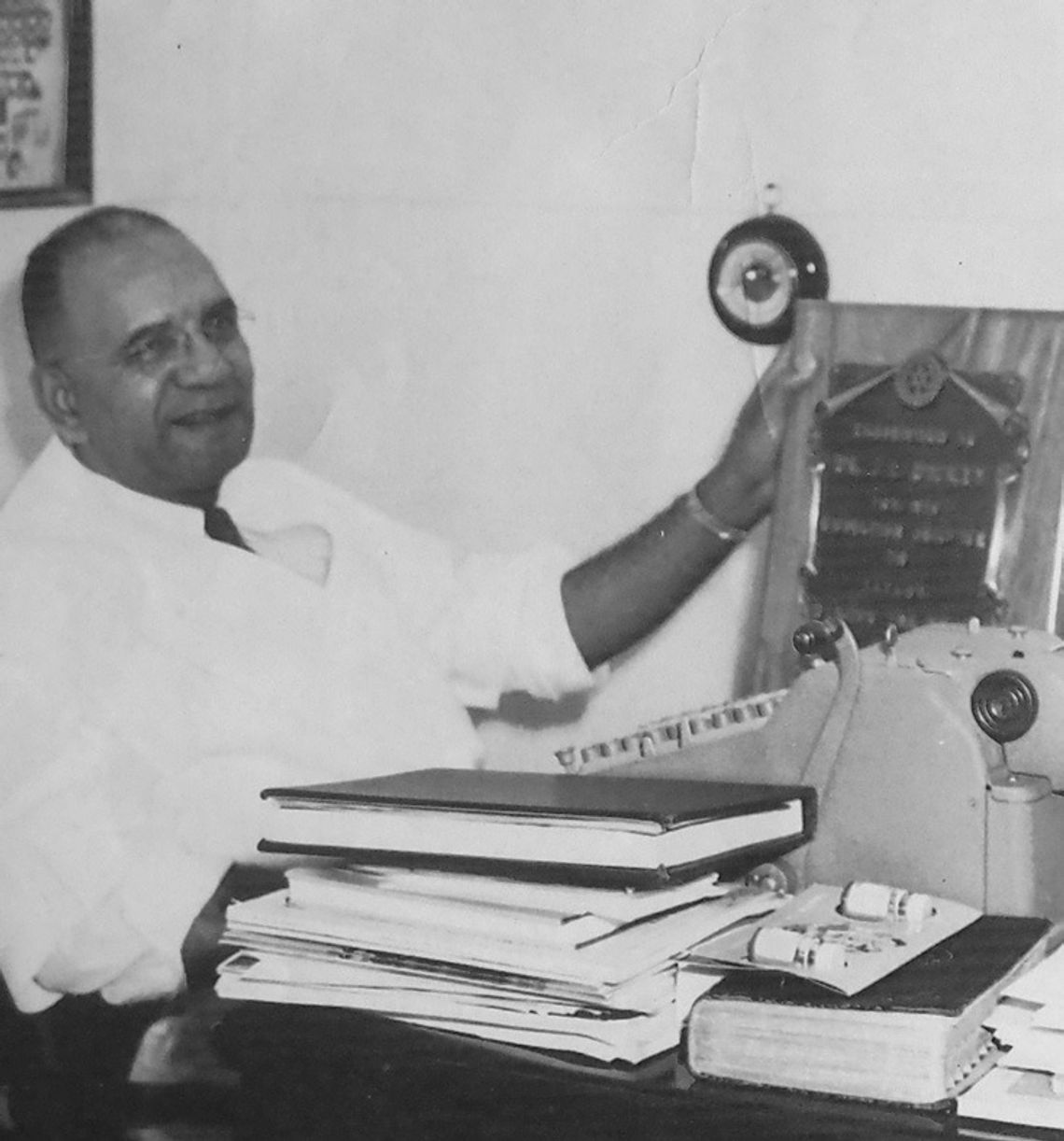
1953 JAMES L. DICKEY HONORED
During the height of segregation, James L. Dickey, a Black physician, received from White city leaders the award for “Most Outstanding Man of the Year for 1952” honoring his vaccination efforts during a typhoid outbreak as well as for other achievements — garnering worldwide press coverage.
2021 SAMSUNG AUSTIN SEMICONDUCTOR ANNOUNCED
On Nov. 23, 2021, the South Korean manufacturing giant Samsung Electronics Co. Ltd. announced it was building a $17 billion facility in Taylor to be known as Samsung Austin Semiconductor.
“This was the single most significant and consequential development for the economy of this area since the railroad came through in 1876,” said Rydell, who served as Taylor mayor from 2017-2024. “So rail took us through most of the first 150 years of the town’s existence, and we can point to the railroad as the key driver in Taylor’s success and prosperity, and I think we are going to see that now with Samsung and high-tech in general being the driver for the next 150 years.” 1854-1855 1854 OR EARLY 1855 ADAM ORGAIN ARRIVES
HUTTO
Adam Orgain is credited with being one of Hutto’s first settlers, and in 2022, government leaders named a 65-acre park, located at 1001 CR 137, in his honor.
The 17-year-old African American slave probably lived in a one-room cabin in the grasslands north of Brushy Creek, now downtown Hutto, to tend the cattle of his master, Sterling Orgain, officials said.
1862 JAMES EMORY HUTTO
James Emory Hutto is the town’s founder and namesake.
In 1862, Hutto purchased 200 acres of blackland prairie along Brushy Creek, followed by an additional 300 acres in 1870. Hutto would go on to become a successful cattleman and cotton grower, said Hutto resident and history commission member Jon Stephenson.
1876 INTERNATIONAL & GREAT NORTHERN RAILROAD
On April 17, 1876, Hutto and others sold easements for the International & Great Northern Railroad to lay its tracks, which would soon run from Hearn through Milam and Williamson Counties with stops in Taylor, Hutto and eventually Austin.
“The old steam engines in 1876 had to have water every ten to 25 miles for steam locomotion to power the engine with people and freight and cars,” Doss said. “At those stations, you would see water towers, which was why the railroad created so many stops. Towns were created all over America because of the trains coming through.”
In the same year, railroad officials bought an additional 50 acres on the north side of the tracks from Hutto and named the train stop “Hutto Station,” said local historian and former Hutto Mayor Mike Fowler.
1878 LOTS SOLD AS THE TOWN GROWS
Hutto and the Orgain family sold lots on the south side of the tracks and saw the town start to expand.
“Before Hutto was established in 1876, families lived along Brushy Creek, but with the railroad, a lot of the people moved into town because they saw the economic opportunities of being near the railroad,” Stephenson said.
New development included a oneroom schoolhouse, a saloon, a church, a post office, a general store and a lumber business, according to reports.
POST 1880S COTTON BOOM
Between 1880-1890, many immigrants, especially from Sweden, began to arrive in the area to grow cotton.
”Cotton was by then commonly called ‘the white gold of Texas,’” Fowler said. “Many new faces were to be seen in the area as a new community developed very rapidly. It was reported that Hutto had 200 residents, a school, three churches and five cotton gins by 1884.”
By 1937, a group of farmers formed a cotton cooperative and stored bales near the railroad. One yard existed northwest of downtown Hutto, by Main and West streets, but it later moved to where The Hutto Co-op currently stands on the west side of town at 420 U.S. 79, Stephenson said.
1886 TORNADO
A major storm in 1886 heavily damaged the new business center of Hutto on the south side of the railroad tracks. In the aftermath, new development relocated to the north side of the tracks.
1900s 20TH CENTURY FIRES
A series of fires, in 1901, 1902, 1916 and 1972 caused the east side of East Street, previously a part of the main commercial drag, to never fully be redeveloped.
“The first two fires led the city to establish a volunteer fire department,” Stephenson said. “Before the 1902 fire, the city had no fire department, only a firebucket brigade.”
1911
HUTTO OFFICIALLY INCORPORATED
By 1911, after Hanstrom and Tinning Water Works drilled the city’s first deepwater well and a new power plant was built, which included electrifying the households of the city, Hutto was ready to incorporate, city officials said.
Willis Dandridge “WD” Holman, a cotton buyer, served as the town’s first mayor.
“The town had gradually grown from 1877-1911, but when the city had its own power source and its own water source, it had developed enough to be incorporated,” Stephenson said. “It led the people to want to have a formal town government to make decisions for how it would continue to be developed, and not just be a drop-off point along the railroad.”
1915
GREAT HIPPO CIRCUS TRAIN ESCAPE
In 1915, a local circus troupe on a railroad train reportedly stopped in Hutto to refuel and water the animals, and during that interval, a hippo escaped from a railcar to nearby Cottonwood Creek, which “flowed beneath the railroad tracks just to the east of the then-Hutto Railroad Depot,” according to Fowler.
“It’s a popular story that became the basis of the identity for the city,” Stephenson added. “But it may be more legend than fact. We have no historically verifiable information to say it ever happened at this point.”
Legend or not, hundreds of hippo statues today dot the city and the animal is the mascot of Hutto High School.
2006
OPENING OF TEXAS 130
With the opening of Texas 130, a toll road that runs parallel to Interstate 35 and connects Hutto to Georgetown, Austin and San Antonio by way of Seguin, Hutto began a period of unprecedented growth which continues to this day.
From the 2000 census, Hutto grew from 1,228 residents to almost 15,000 just 10 years later.
The toll road has allowed residents to find affordable housing with a 30-minute commute to downtown Austin, said Mike Snyder, Hutto’s mayor.
“You can go 80 miles per hour on it, and you can get from here to (Austin Bergstrom International) airport in like 25 minutes,” he said. “I think that allows people to live out here and not have long commutes.”
Today, the city boasts just under 50,000 residents, and the recent arrival of Samsung to the area has only fueled the population boom, Snyder said.
“Really, our biggest milestone has been the unprecedented growth,” Snyder said. “With the last count of the (Hutto Independent School District), there were just over 50 languages spoken in Hutto. We have people from Ukraine, Afghanistan, all over South America and Europe. It’s just an amazing group of people all coming here for the same thing: opportunity.”
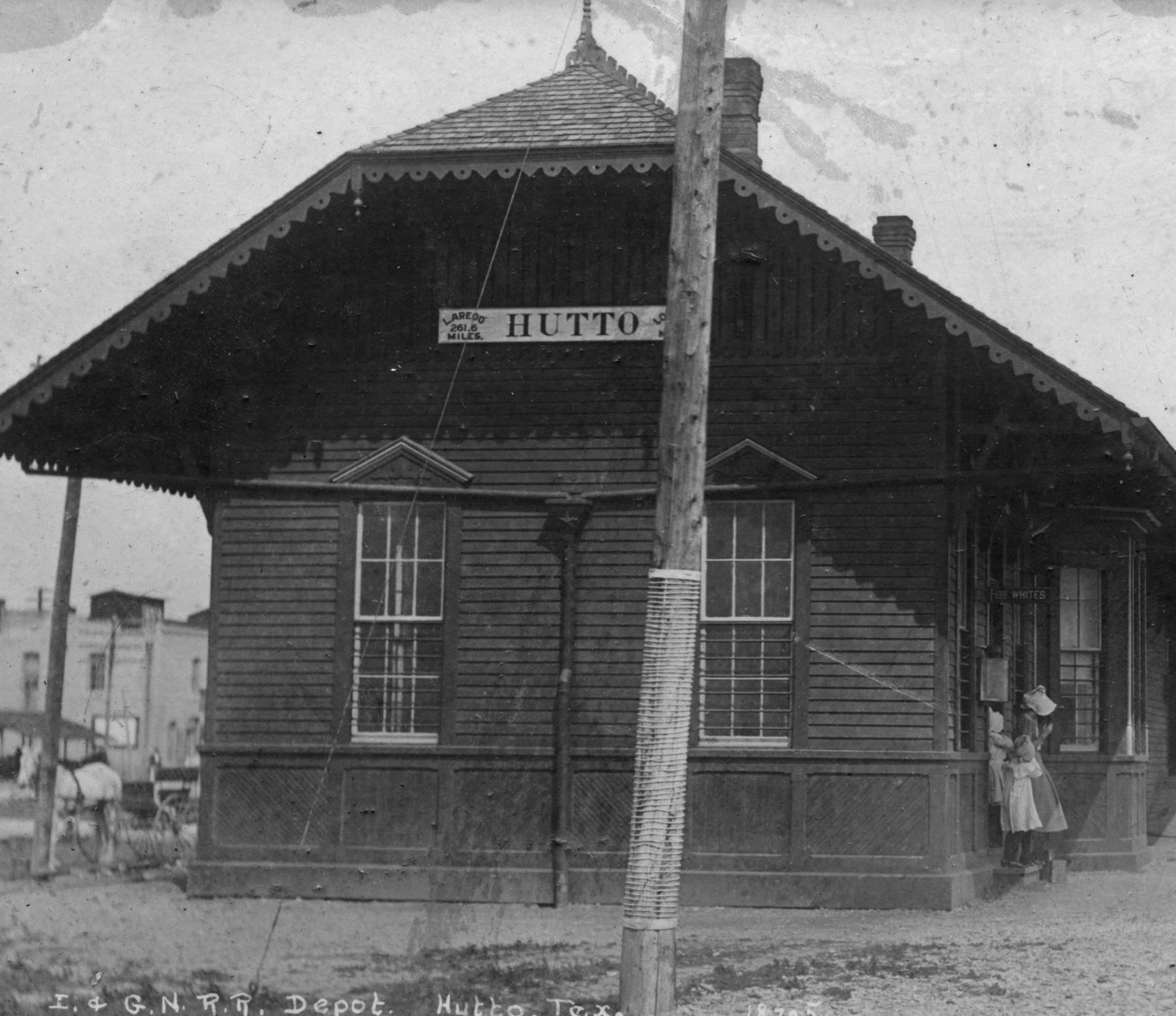
Steam engines stopped at the Hutto Railroad Depot around the turn of the 20th century. COURTESY MIKE FOWLER

Comment
Comments