CULTURE CLUB
STANDING TALL IN TAYLOR New Gov. Dan Moody statue unveiled, Juneteenth rodeo exhibit opens
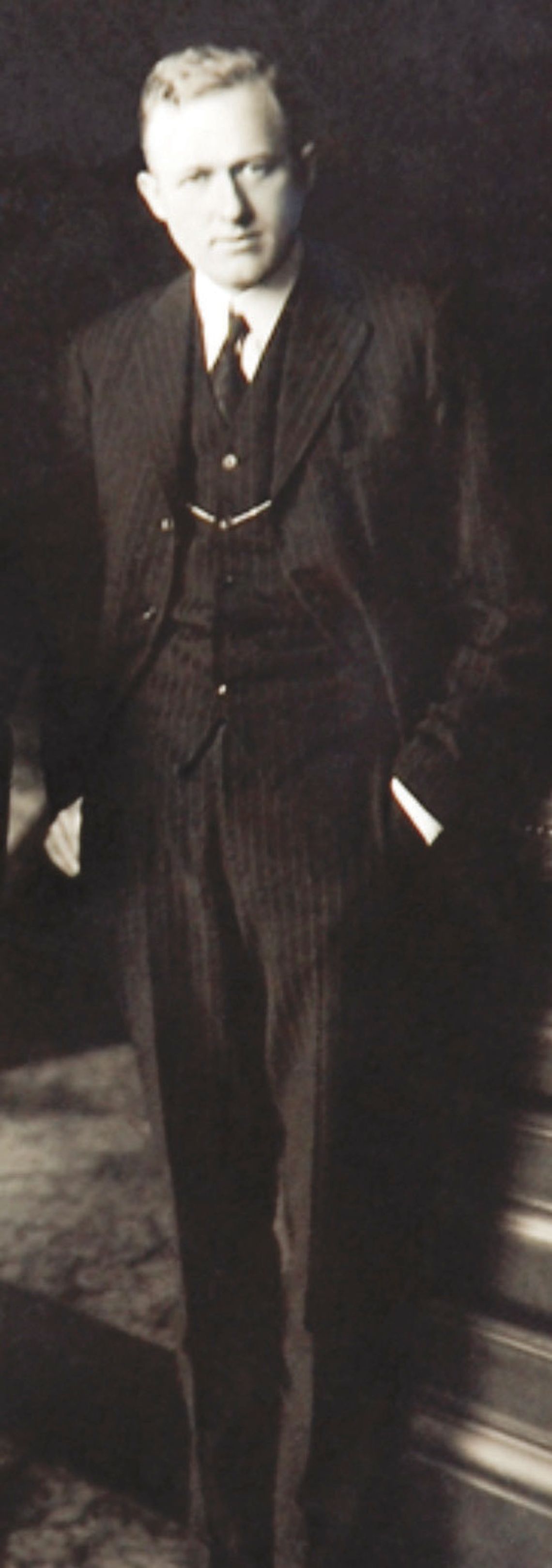
TAYLOR — The year 2026 marks the city’s 150th birthday observance. To celebrate, the Dan Moody Museum is showcasing its long-awaited bronze statue of Moody, a Taylor native and the youngest governor of Texas.
The unveiling took place this month at the museum, 114 W. Ninth S.
Joe Kenney of Georgetown created the life-size image. Moody stood 6-feet 1-inch tall.
The museum is in the 1887 home built by the Robertson family when they moved to Taylor from Eastern Tennessee. When Dan’l Moody (Dan Moody’s father) married Nancy Robertson in 1890, he moved into the house, and they started a family.
Meanwhile, Taylor is also observing its ties to African American culture with an exhibition downtown paying homage to Black rodeo stars as part of Juneteenth celebrations.
ABOUTDANMOODY
Daniel James Moody was born on June 1, 1893, in Taylor. He graduated from the University of Texas School of Law and was admitted to the State Bar of Texas in 1914.
Before he became governor of Texas at 33, he was the youngest district attorney in Williamson County and made a name for himself successfully trying a case against the Ku Klux Klan.
In 1924, he sent four members of the KKK to prison. The next year, he was elected Texas attorney general.
During the time Moody served as the state’s top prosecutor, he investigated former state Gov. James E. Ferguson and his wife, Miriam A. “Ma” Ferguson, who was serving as governor at the time.
In 1927, Moody defeated Ma Ferguson in a runoff election to become the 30th governor of the Lone Star State.
Moody served two terms from 1927 to 1931. Afterward, he returned to private practice in Austin. He died on May 22, 1966, and is buried at the Texas State Cemetery.
FROM IDEA TO INSTALLATION
It has taken about 10 years from idea to installation for the sculpture of Moody to become reality.
The Friends of the Moody Museum — a nonprofit that supports the museum’s preservation, community outreach and events — spearheaded the statue initiative.
According to Susan Komandosky, Advisory Board chairwoman for the museum, the initial meeting with sculptor Kenney occurred in 2017. Then the Friends went to work raising funds.
“Our original plan was to raise the money and have the statue by 2020, but we all know what happened that year,” said Komandosky, referring to the COVID-19 outbreak that brought so many operations to a standstill.
But now “the statue will stand on a plaza situated on the east side of the front lawn at the museum, covered with bricks and a granite plaque listing the major donors,” she added.
According to Komandosky, the plaza was provided by the city, with funding for the sculpture paid by the Friends of the Moody Museum and “many generous donors.”
SCULPTOR JOE KENNEY
After retiring as the chief executive officer of a health management company he founded, Kenney started sculpting in earnest in 2001. He studied at the University of Oklahoma and the Loveland Colorado Academy of Fine Arts after receiving his master’s degree in healthcare administration from the University of Minnesota earlier in his career.
The Friends supplied images, and then Kenney went to work crafting a piece worth of a former Texas governor.
“The sculpture is standing in a traditional Greek and Roman posture, presenting an open and dignified figure,” Kenney said.
ARTISTIC PROCESS
Kenney uses ZBrush, a virtual 3D digital sculpting and painting tool, to create his bronze artwork. This method eliminates the need for a ladder or crawling under large statues.
Kenney can also reduce or enlarge a statue for another casting. He doesn’t have to physically store the molds at this studio.

According to Kenney, it takes about the same amount of time to sculpt in clay as it does on his computer.
“It is basically the same process, except in clay to make a change, the artists cut the clay or add more. Digital has a history and auto-save feature; if I decide I am not happy with the results, I can go back to the file created prior,” the artist said.
THE PYROLOGY FOUNDRY AND STUDIO
Located in Bastrop, the Pyrology Foundry and Studio crafted the bronze.
After an artist is pleased with his or her sculpture, the Pyrology Foundry artisans handle the next step. The foundry can use the lost-wax method to cast bronze sculptures, a 6,500-year-old method or a variation utilizing a 3D-printed original.
First, the artisans at the foundry create a mold using the artist’s clay or polymer material by covering it in several thin layers of silicone rubber, then adding a plaster housing. Next, hot wax is poured into the mold, where it cools and hardens.
The foundry has then created a wax duplicate of the original sculpture. Then, a foundry artisan fixes flaws in the casting and adds exit channels for the molten bronze to flow during the casting process.
Next, the wax sculpture is dipped into a ceramic slurry until it reaches a half inch in thickness. It is then finished with silica sand and allowed to dry, in a process called investing.
After investing, the ceramic mold with the wax inside is heated in a kiln. The interior wax melts, creating a mold in the void.
According to Kenney, the foundry made high-resolution 3D prints of his Moody statue using a proprietary polymer material, similar to the lost-wax process.
The 3D print is an alternative to creating a ceramic mold and then a wax positive to burn out of a shell.
Bronze blocks are placed inside a graphite crucible, then moved to a furnace and heated to 2,000 degrees.
Once molten, the metal is removed and poured into the sculpture’s mold and left to cool for 24 hours.
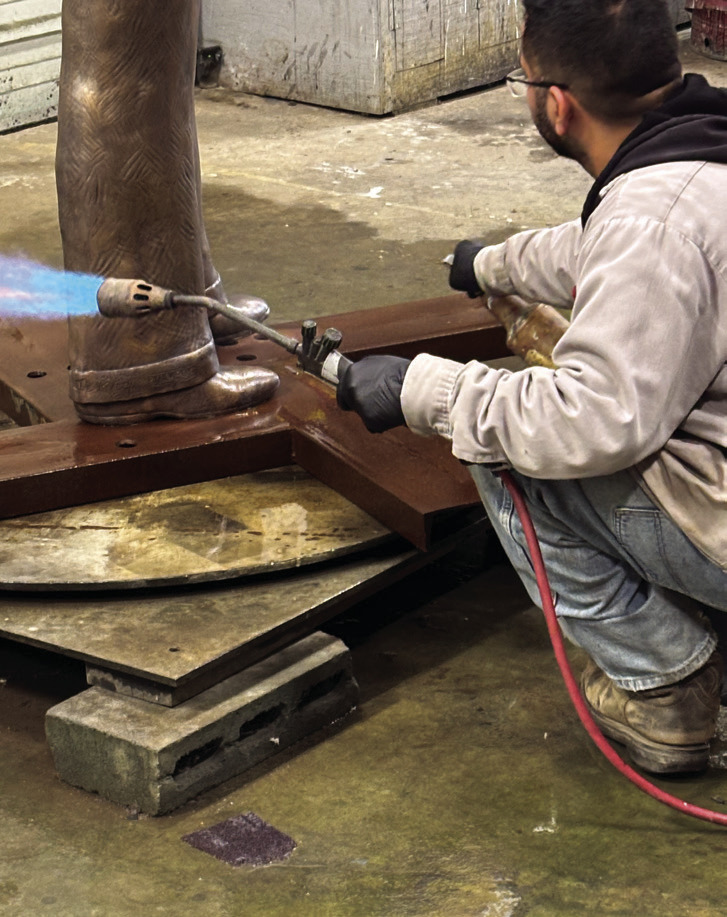
The ceramic mold is removed by chipping or sandblasting, and the bronze exit channels are removed. To apply a patina, the foundry uses chemicals and heat; the sculpture’s bronze reacts and oxidizes.
For the debut of Taylor’s Moody statue, the foundry transported and installed the piece at the museum.
LEARNMOREABOUTMOODY
The museum is open 2-5 p.m. Fridays and Saturdays. It is free to enter and offers tours. For additional information, visit moodymuseum.com.
According to staffers, there are several books to learn more about the 30th governor of Texas.
• “
10 Dollars to Hate”
by Patricia Bernstein offers a broad explanation of the Ku Klux Klan and its power in the 1920s.
• “
You Can’t Do That, Dan Moody!”
is a 1998 young-adult biography and later a play by Ken Anderson, a former prosecutor and state district judge.
• “ Dan Moody, Crusader for Justice,” a 2008 follow-up by Anderson and a more comprehensive biography and legal history.
• “
Klan on Trial,”
a 2017 short movie written by television personality Chet Garner and Emily Treadway. The latter is a reporter for the Taylor Press and a contributor to East Wilco Insider.
SOUL CIRCUIT: JUNETEENTH RODEOS IN TEXAS EXHIBIT
The McCrory Timmerman Gallery and the Dickey Museum & Multicultural Center will host “Soul Circuit: Juneteenth Rodeos in Texas,” an art exhibit honoring Juneteenth.
The exhibit illustrates the network of Black rodeos across Texas with 43 blackand-white framed photographs.
Based on the book “Juneteenth Rodeo” by photographer Sarah Bird, the exhibit was organized by the Neill-Cochran House Museum of Austin and presented in partnership with Humanities Texas.
“This opportunity to elevate Black culture through storytelling is 100% in alignment with the mission of the Dickey Museum & Multipurpose Center,” said Nakevia Miller, executive director of the museum. ‘We look forward to ensuring that the stories, traditions and art of East Williamson County are remembered, celebrated and elevated.”
“Soul Circuit: Juneteenth Rodeos in Texas” runs through July 15 at the McCrory Timmerman Gallery, 112 W.
Second St.
Comment
Comments