

AVIATION
FLYING THE FRIENDLY SKIES OF EAST WILCO
Bustling airports seeing more flights
Central Texas is a global destination for birdwatching, with more than 400 species observed in the area, according to the Cornell Lab of Ornithology.
In addition to martins and warblers, the sky over Williamson County is filled with other types of winged wonders: helicopters, corporate jets, crop dusters, military aircraft and private planes crisscross the clouds, departing from numerous local, privately owned airstrips as well as the Taylor Municipal Airport.
In the Taylor and Hutto area, much of the air traffic is commercial.
Corporate planes and helicopters land at Taylor’s city-owned airport, 303 Airport Road. Airplane and helicopter flying classes are held there, too. There is a heliport for executive helicopter service just west of Hutto. Crop dusters frequently take off from private airstrips. The plane often seen carrying advertising banners launches from the Taylor airport.
The Taylor airport is also home to a branch of AirLife Texas, a medical helicopter service. Airlife Texas opened its Taylor helicopter base in December 2025. It is a division of Air Methods helicopter transport, one of the nation’s leading emergency air medical service providers.
WE’RE AIRBORNE
Although it’s not nearly the size of Austin Bergstrom International Airport, the Taylor Municipal Airport stays busy, officials said.
The airport has 64 hangars on-site. All are currently being used and there is a long waiting list of hopeful renters. Airport Manager Stacey Batch reported there were 58,984 total airport operations (takeoffs and landings) from the facility in 2025. The facility sold 47,707 gallons of 100LL aviation fuel, which more than doubled from the previous year.
“The Taylor Municipal Airport provides aviation access for businesses, corporate travelers and general aviation users, allowing the city to connect to regional and statewide markets,” Batch said. “The airport is officially classified by the Texas Department of Transportation Aviation Division as a general-aviation business service airport. What that means is the airport doesn’t provide your typical commercial airline service, but instead serves general aviation aircraft including private, corporate and charter aircraft.”
Batch shared some data from the Texas Department of Transportation regarding the airport, which is designated by the Federal Aviation Administration as “T74.” The data is drawn from an economic impact study done in 2018, which a TxDOT spokesman said was in the process of being updated.
Even though the data predates Taylor’s current industrial boom and economic growth, the numbers are significant, officials said.
The state study estimated the airport’s total annual economic impact in 2018 at $6.33 million. The report showed the airport supports 74 jobs with an annual payroll of $1.83 million.
Today, with Samsung Austin Semiconductor and the Hutto Megasite leading a full host of international companies flocking to the area, having a conveniently located airport could be a competitive boon for the city, officials said.
“While it may not be the benefit that makes or breaks an economic development deal, (the airport) is certainly icing on the cake for those who would like quick access in and out of the city to visit their facilities without having to travel to Austin,” said Daniel Seguin, executive director of Community Services.
In 2024, the city contracted with Woolpert, an international design and development company, to create an airport master plan. The study found the 80-yearold facility needed major upgrades and recommended improvements to the airstrip and surrounding facilities totaling about $69 million over a 20-year span.
The consulting firm recommended the runway be extended by at least 1,000 feet to meet the length needed for jet aircraft, construct a new terminal building of at least 6,250 square feet, and add at least 66,000 square feet of hangar space to meet the demands of future tenants.
RISING HIGHER
Efrain Lopez, a former Taylor Airport Advisory Board member, said while the facility is a great benefit for the city, the potential is there for it to become much more.
Lopez owns Taylor Aviation Services, tavservices.com, an aircraft maintenance and repair shop at the Taylor airport.
Lopez has been in aviation since 1982 and has lived in Taylor since 2005. He bought the mechanic business from its previous owner seven years ago and has been watching as Taylor loses ground to the Austin Executive Airport, which opened in 2011, and the Georgetown Executive Airport, or GTU, which is older than Taylor’s airport.
Both executive airports have longer runway lengths and can accept larger aircraft. Austin Executive Airport also has extended amenities for corporate pilots, who are often stuck for hours or even overnight between their arrival and when their clients want to return home. Entertainment rooms, a weather room, a comfortable lounge, massage chairs and help to book lodging for overnight stays are part of the services offered to visiting pilots.
Taylor Municipal Airport has a small pilots’ lounge area in a 1950s-era Quonset hut where pilots can wait, but it needs upgraded décor and added services, Lopez said.
“It’s just not up to the times and you have these corporate people that want better, especially when it is offered to them not far down the road. By all means, I don’t mean anything in a bad way. I want this place to grow. But if you’re going to be attracting executive people, they’re not going to come to this place where they have to pump their own fuel,” Lopez said.
The business owner agrees with much of what is in the consulting firm’s marketing plan, affirming that more hangars and a longer runway will go a long way toward helping move Taylor’s airport to the next level.
Lopez said the combination of affordable, available planes and economic growth in the area is creating an environment where Taylor could capitalize on an underserved market and bring more business to the city and the airport.
“It’s not that they’re chomping at the bit to come here. It’s just that they’re chomping at the bit to find anyplace to keep their airplane out of the weather. If we were to build another 100 hangars they would be immediately gobbled up,” he said. “This place is definitely in the spot for tremendous growth if we keep up with it. If not, we’ll stay behind.”
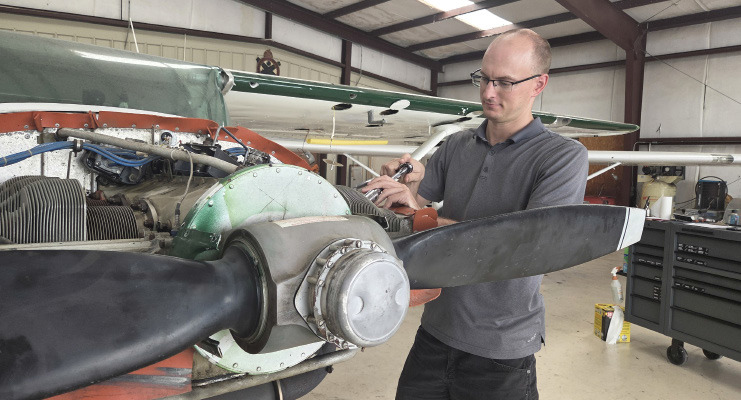
Taylor Aviation Services provides onsite services that help corporate pilots and private aircraft owners keep their planes in the air. Everything from new tires and required annual check-ups to full engine replacements can be done in the TAS hangar. The city airport is also home to businesses that work on aircraft navigation systems and on helicopter repair, all important services for an airport to offer.
The requirement to do thorough yearly checkups and routine preventive maintenance is what helps to keep older planes flying.
The oldest plane Lopez’s shop is working on is currently a 1953 model, but he knows many people who are flying World War II-era craft. Lopez said while he has seen 1960s aircraft purchased for as little as $15,000, once the mechanical and restoration work is done the total investment could be $50,000.
“It was probably cost prohibitive back in the day, but now there are a lot of people who have the means to afford an aircraft,” Lopez said.
YOUR OWN LANDING STRIP
A person with as little as 10 acres of land can create a landing strip for a small aircraft, according to Taylor native and pilot Dayton Dabbs. He is a corporate pilot and owner of Lone Star Magni Gyro, facebook.com/dayton.dabbs.
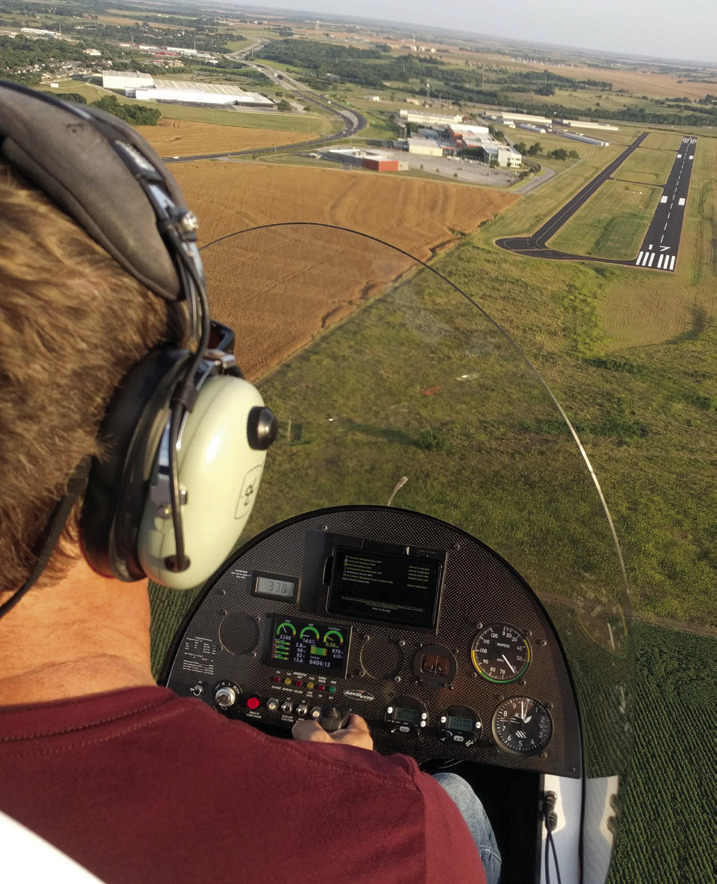
He trains gyroplane pilots in his spare time and has flown his gyro around the country.
“Aviation is not something that is necessarily just for the rich or affluent,” he said. “There’s plenty of folks out there flying $15,000 airplanes that they maintain and operate for really not much more than what it costs to own a boat, or any other sort of a recreational vehicle.”
Dabbs started taking flying lessons at age 14 and got his pilot’s certification at 17. He currently is one of only five people in the United States authorized by the FAA as a certification examiner for gyroplane pilot licenses.
The lifelong flight enthusiast has flown his gyro from Taylor to Los Angeles to New York and back. In 2017, Dabbs and three other gyroplane pilots flew to Havana.
According to the group, they were the first U.S. flyers in 60 years to legally cross the Straits of Florida and land in Cuba under visual flight rules. They were also the first to leave in that manner.
The round-trip to the island took about 40 hours of flight time spread over six days, Dabbs said. Gyroplanes can travel about 300 miles before refueling and the average speed is 90-100 miles per hour.
“The reason you fly a gyroplane is not to get from point A to point B quickly. It’s actually a pretty slow aircraft, but it flies low enough to where you can see all the sights. The maneuverability is incredible. It really is just as close to being Superman as you can get,” he said.
In addition to recreational use, gyroplanes are sometimes used by police departments because of their ability to fly at low altitudes.
Dabbs agrees more people are now able to afford to own and fly an aircraft and hopes to see a growing interest in recreational flying and pilot training among locals.
“I would love to encourage children, teenagers. If they dream of aviation, it is very achievable and they are capable of doing it,” Dabbs said.
One of the largest impediments to owning an aircraft is finding a hangar to house it near an airstrip. Dabbs said this is why many people opt to build their own airstrip and hangar. While registering a small private airstrip or helipad with the FAA is considered a best practice, it is not required. There are few obstacles other than owning adequate land.
Hangar communities such as Cross Country Estates just north of Hutto allow multiple residential properties to share resources. The subdivision features 29 homes with hangars or airplane tie-downs on lots from 1 to 5 acres, each with its own taxiway access to a shared 2,500-foot airstrip.
MANY REWARDS TO FLYING
Taylor native Tim Mikeska has spent 50 years working in emergency services. He has served on the Taylor Airport Advisory Board and is the Aircraft Owners and Pilots Association Airport Support Network representative for the area.
Mikeska volunteers to provide compassionate flights for nonprofit organizations such as Pilots N Paws, pilotsnpaws.org.
In 2023, Mikeska flew an emergency flight to rescue a pup named Paco who was scheduled for euthanasia in a kill-shelter in the Rio Grande Valley. Working together, Valley Dog Rescue and Austin Pets Alive had found a home for Paco in Colorado, but someone was needed to pick up the dog immediately before his date with death.
Mikeska literally swooped in to save the day.
“For me, as a pilot, the greatest satisfaction is knowing that a seat in that airplane can change someone’s day, their future or even their life,” he said. “I don’t love flying because it lets me escape the world. I love flying because it allows me to reach more of it. It’s worth all the expense of owning an airplane when you can touch people and pets’ lives like this.”
It really is just as close to being Superman as you can
get.”
— DAYTON DABBS PILOT

Comment
Comments