
CULTURE CLUB
Smithsonian exhibit comes to Taylor
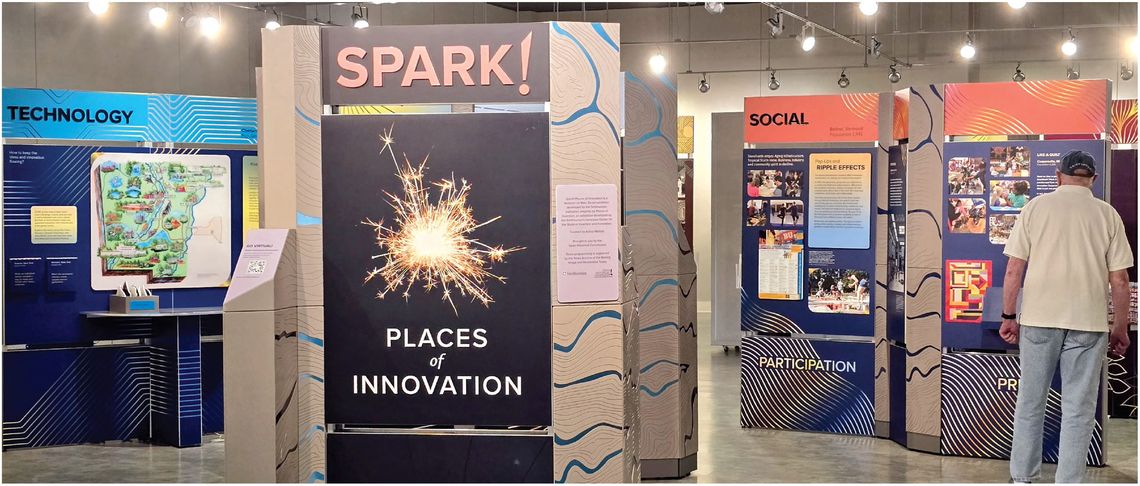
TAYLOR — Coinciding with the city’s celebration of 150 years of history, a traveling exhibit sponsored by the Smithsonian Institution to commemorate the impact of rural communities across Texas is stopping in Taylor.
“Spark! Places of Innovation Celebrating Rural Communities” is on a yearlong, six-town tour and celebrates inventions, innovations and history, officials said.
The free exhibit lands Aug. 15 and runs through Sept. 27 in the Heidenheimer Building, 209 E. First St. Hours are 10 a.m. to 5 p.m. Monday to Thursday, and 10 a.m. to 6 p.m. on Friday and Saturday.
City officials said the backing of the Smithsonian speaks well for the exhibit and the decision to spend six weeks in Taylor.
The Smithsonian is the world’s largest museum complex, with 21 facilities across the U.S., including 11 institutions and the National Zoo in Washington, DC.
The Smithsonian Institution Traveling Exhibition Service, also known as SITES, and the Texas Historical Commission, the state agency dedicated to historic preservation, collaborated to create the traveling exhibit specially for Texas.
“Spark!” is part of the Smithsonian’s Museum on Main Street program
“SPARK! PLACES OF INNOVATION”
According to the exhibition curators, innovation can happen anywhere, and it’s taking place right now in small towns across America.
Rural Americans are creating new products, taking risks, meeting challenges and seizing opportunities that change local life and sometimes reach far beyond, they said.
“Small town and rural places were celebrated cradles of American invention and innovation. In technology, the arts and society, their self-reliant creative traditions remain as vital today as ever,” said Arthur Molella, founding director of the Smithsonian’s Lemelson Center for the Study of Invention and Innovation.
HOWDIDWEGETHERE
According to Ruby Fisher, Taylor’s Main Street manager, the opening of the exhibit marks the culmination of a yearlong process of behind-the-scenes work.
It all started as an application to the Texas Historical Commission.
As she explained, the commission was looking for towns with fewer than 20,000 people in each of its 10 Texas Heritage Trail regions. With Taylor’s strong history in transportation and agriculture, paired with its sesquicentennial, the city secured the exhibit for the Brazos Trail region, an 18-county area of Central Texas.
“The theme of the exhibit matched really well with Taylor. We are really an innovative place,” Fisher said.
Since then, Fisher has been working with area partners to add more exhibits to the showcase. From railroads and restored cars to the skatepark, the “Spark! Places of Innovation” exhibition will showcase Taylor’s past and present.
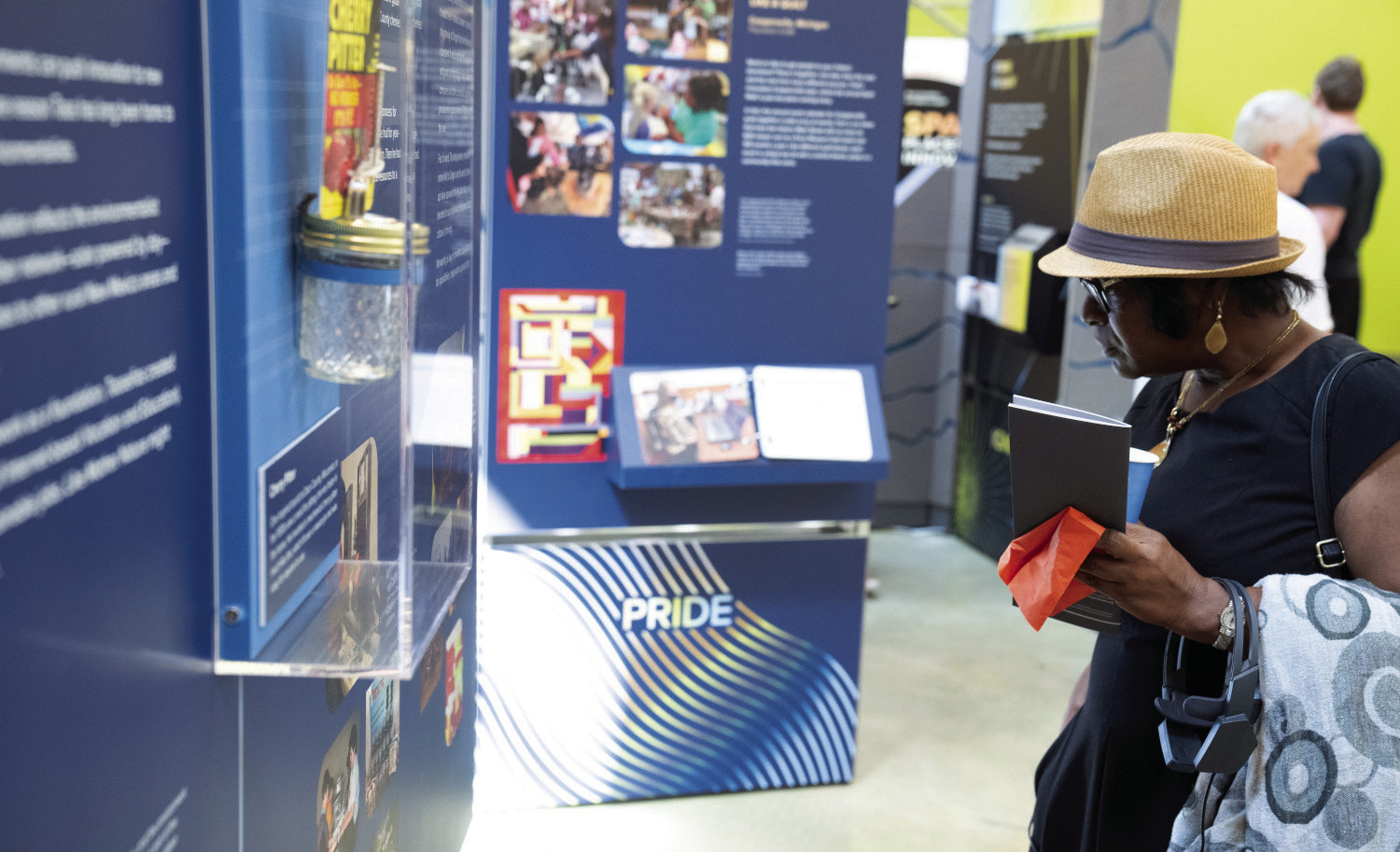
The “Spark! Places of Innovation” exhibit celebrating rural America is on a tour of six Texas cities, including Taylor. COURTESY OF THE SMITHSONIAN INSTITUTION
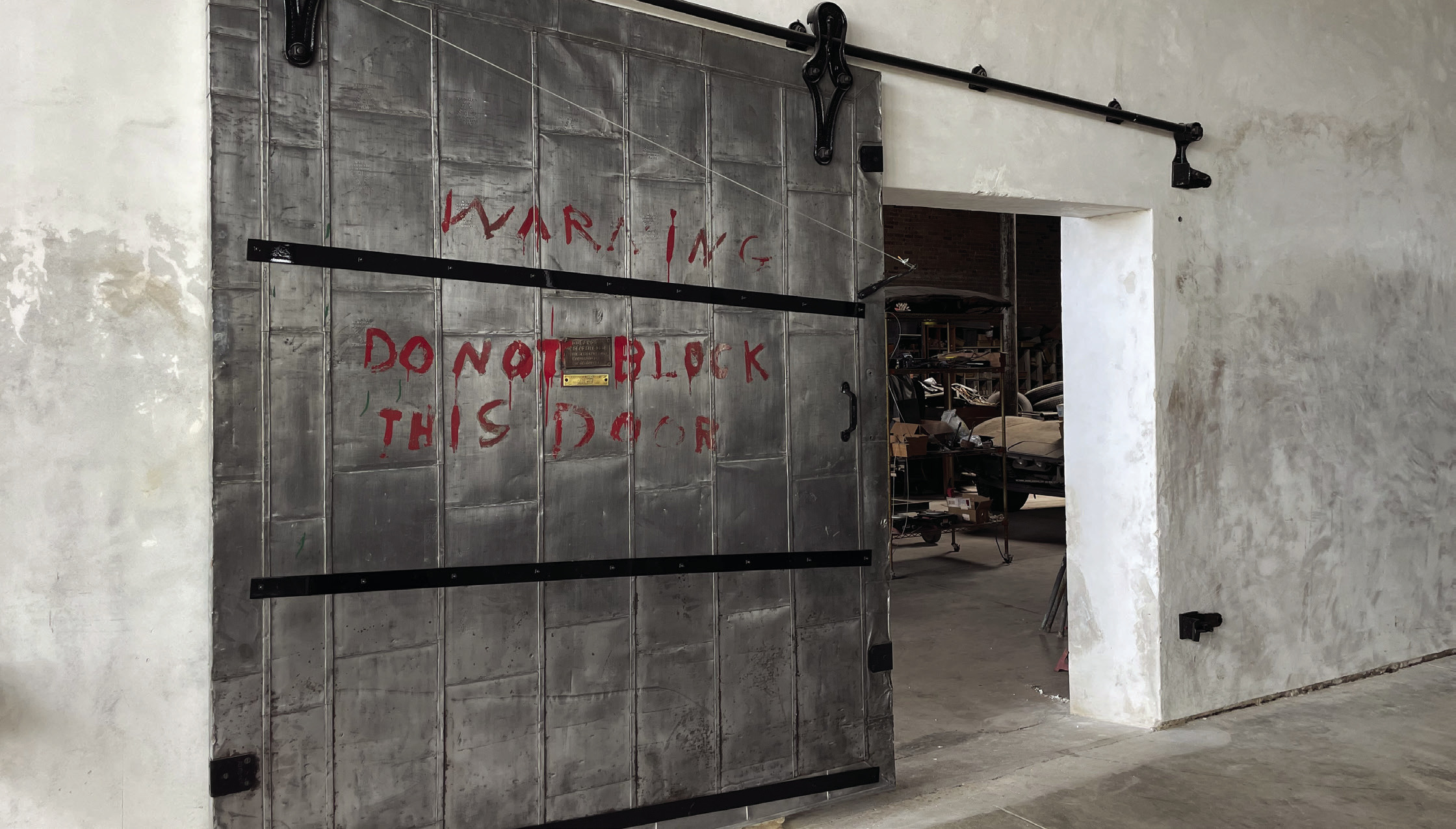
One of the original tin-clad fire doors in the Heidenheimer Building with an original pulley system. An exhibit sponsored by the Smithsonian Institution celebrating rural America will be featured there from Aug. 15 to Sept. 27. PHOTO BY CATHERINE PARKER
WHAT VISITORS WILL FIND
The presentation measures 900 square feet and arrives in crates from its previous location.
Several local groups will contribute 13 additional exhibits, covering local history in addition to the Smithsonian’s curation. Visitors will find displays on Taylor’s own governor, Dan Moody, as well as an update on the restoration of the Dr. Dickey Museum and Multi-Purpose Center.
Other items include a railroad history exhibit from the Rockdale I&GN Museum Depot. The Williamson Museum of Georgetown will also contribute a local history exhibit.
Two Taylor Legacy Early College High School students will offer two showcases. One focuses on Taylor’s music history. The other documents the development of the youth-driven Project Loop Skate Park.
According to Jeff Snyder, owner of Jeff’s Resurrections, the Taylor Fire Department’s 1916 American LaFrance fire engine, an ongoing restoration project, will also be on display. He will also curate a collection of restored cars tied to Taylor’s history.
WHERE’S THE
HEIDENHEIMER BUILDING?
The “Spark! Places of Innovation” exhibition will be on display in a newly renovated space, the Heidenheimer Building, 209 E. First St.
Originally known as the Heidenheimer Wholesale Grocers Warehouse, the Galveston-based business erected the building in 1905. It included a spur rail line right to the front entrance, and area grocers drove their horse-drawn carts to pick up their orders.
The building in Taylor is said to be one of the oldest existing structures in town, having survived the fire of 1879, said city officials.
According to the Briscoe Center for American History at the University of Texas, three Heidenheimer brothers founded a wholesale grocery company in 1867, based in Galveston.
The brothers operated one of the largest grocery companies in Texas as well as associated businesses, including a coffee and salt importer, a flour mill and a sugar plantation.
German-born Samson Heidenheimer built a fortune as a Confederate cotton smuggler at the time of the Civil War. During his tenure in Galveston, he purchased a large house that became known as the Heidenheimer Castle, later lost to fire in the 1970s.
NEW LIFE FOR AN OLD BUILDING
Snyder owns the Heidenheimer Building and has been renovating the site for over five years with the help of both federal and state restoration grants. He enlisted the assistance of O’Connell Architecture LLC, based out of Austin, known for its work on the Elizabeth Nay Museum.
Snyder is donating the space for the exhibit before he utilizes it for his business needs. Since 1990, he has been restoring classic and antique vehicles in his workshop in Taylor, earning coveted awards at national and international concours and shows.
The Heidenheimer Building features a soaring ceiling with exposed rafters and original doors.
According to Snyder, the Durand’s Tin-Clad Fire Doors would automatically close in the event of a fire, paired with Allith Manufacturing inclined tracks and weighted pulley systems.
Much of the building’s original details remain, with the addition of a loft overlooking the gallery space. The building’s systems received a complete overhaul from the roof to the air conditioning.
In front of the building, the original railroad spur line has been exposed, a unique feature on First Street. It runs along the street easement, and the restoration crew has laid original bricks to pave the area in-between the tracks.
In addition to the railroad spur, this block features its original pine-block pavers. A new interpretive sign with a historic photo engraved in glass is found at the intersection of First and Porter streets, explaining the wood’s use.
Visitors will be able to see the exposed pine block pavers in a recently excavated crosswalk in front of the Blazilmar Hotel. Common in Texas near railroad depots, the pavers are set with the wood grain positioned vertically.
TOUR OF TEXAS
Taylor is the third stop on the sixtown tour. It began in Kerrville on May 16, before relocating to Alpine. After Taylor, the exhibit will be crated up and transported to Snyder, Bracketville and finally end in Atlanta in January and February 2027.
If you are interested in contributing, Fisher is looking for volunteer docents.
For more information, look for upcoming announcements on the Main Street Taylor Texas Facebook page at facebook.com/p/Main-Street-Taylor-Texas-100095079411445/.
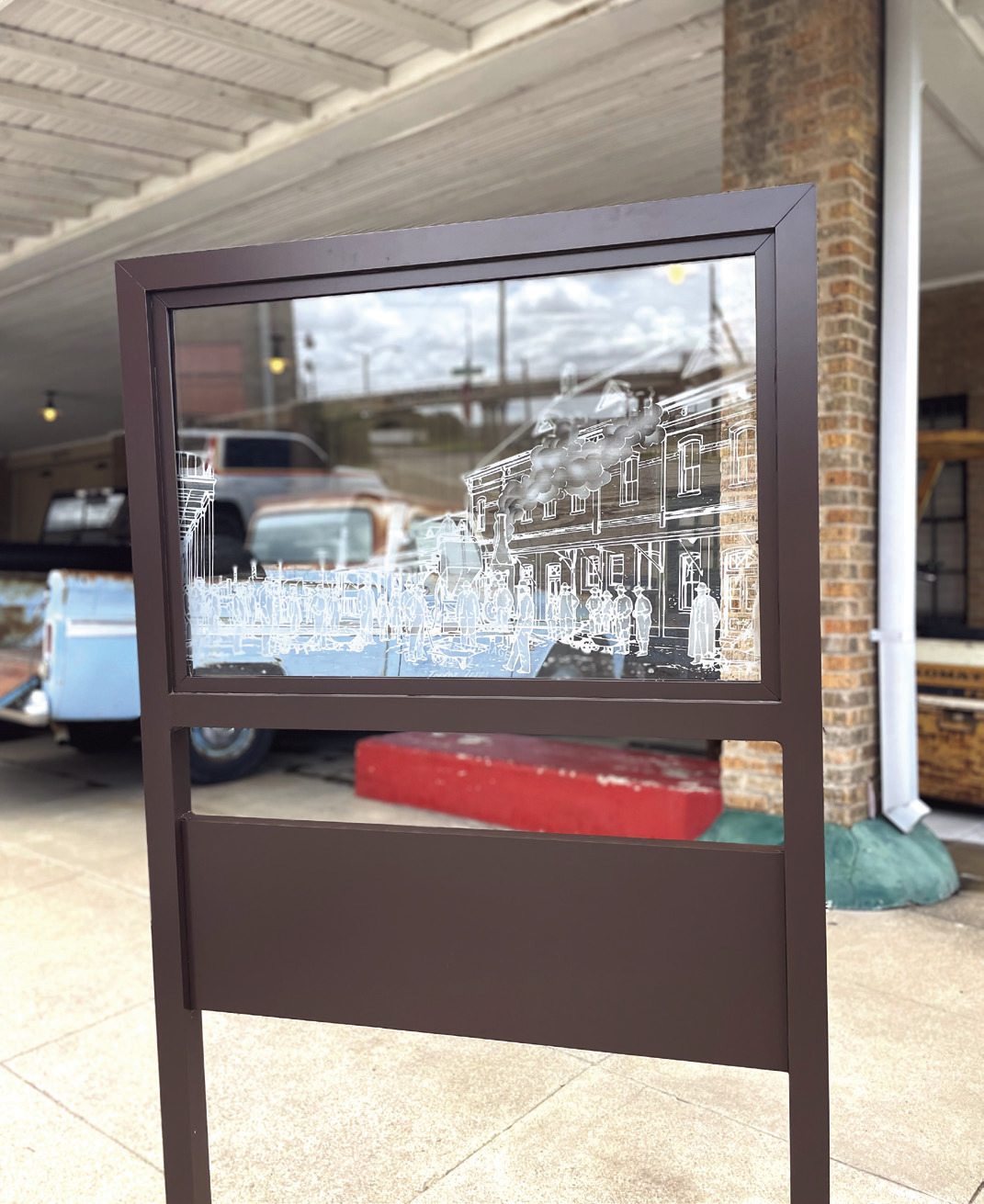
A new interpretive sign was mounted near the Heidenheimer Building at First and Porter streets explaining the wood-block pavers, common in front of train depots. A temporary museum exhibit opens at the Heidenheimer in August, shedding a light on Taylor’s history. PHOTO BY CATHERINE PARKER
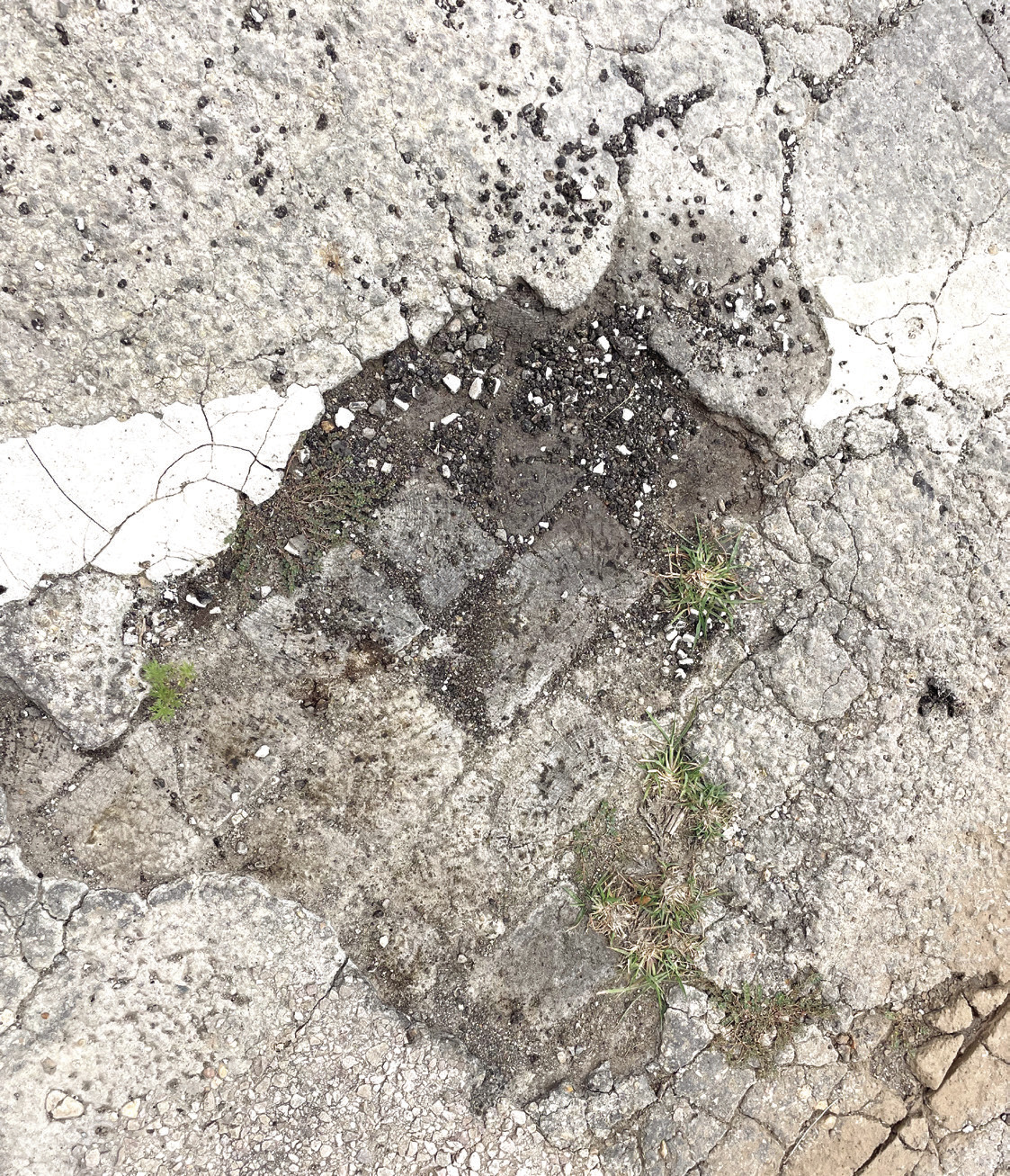
An up-close look at the historic pine block pavers on First Street in front of the Blazilmar Hotel. The site is close to the Heidenheimer Building, where a Smithsonian Institution traveling exhibit showcasing rural America will be featured starting in August. PHOTO BY CATHERINE PARKER

Comment
Comments