
EDUCATION
UNIVERSITY OF TEXAS-TAYLOR CENTER:
TAYLOR — The genesis of a University of Texas campus in Taylor didn’t happen overnight.
In 1996, when the late John B. Nelson Jr. and his wife, Rosemary B. Hauser, partnered with a number of community leaders and officials to bring Temple College to Taylor through what is now called the TCAT Foundation by funding the purchase and renovation of a former H-E-B at 516 N. Main St., they and their board thought they had already attained a lofty goal.
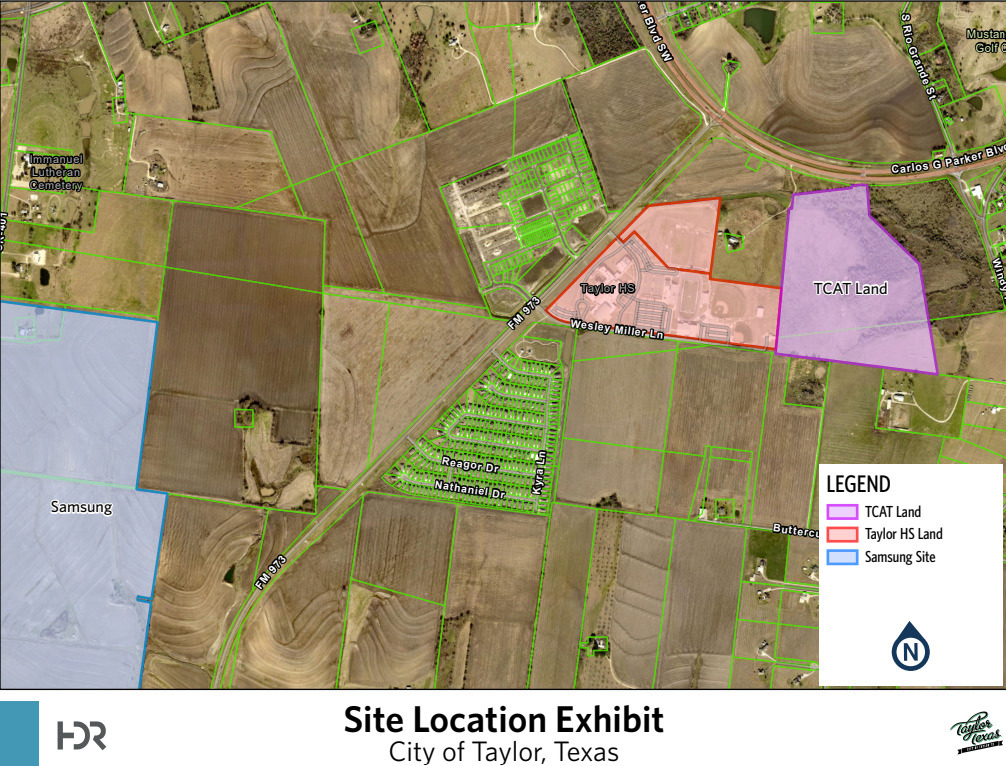
But two years ago, thanks to TCAT’s donation to UT-Austin of 68 acres at U.S. 79 near FM 973, just east of the Samsung Austin Semiconductor facility, their vision to bring higher education to Taylor is being fulfilled — beyond their wildest dreams.
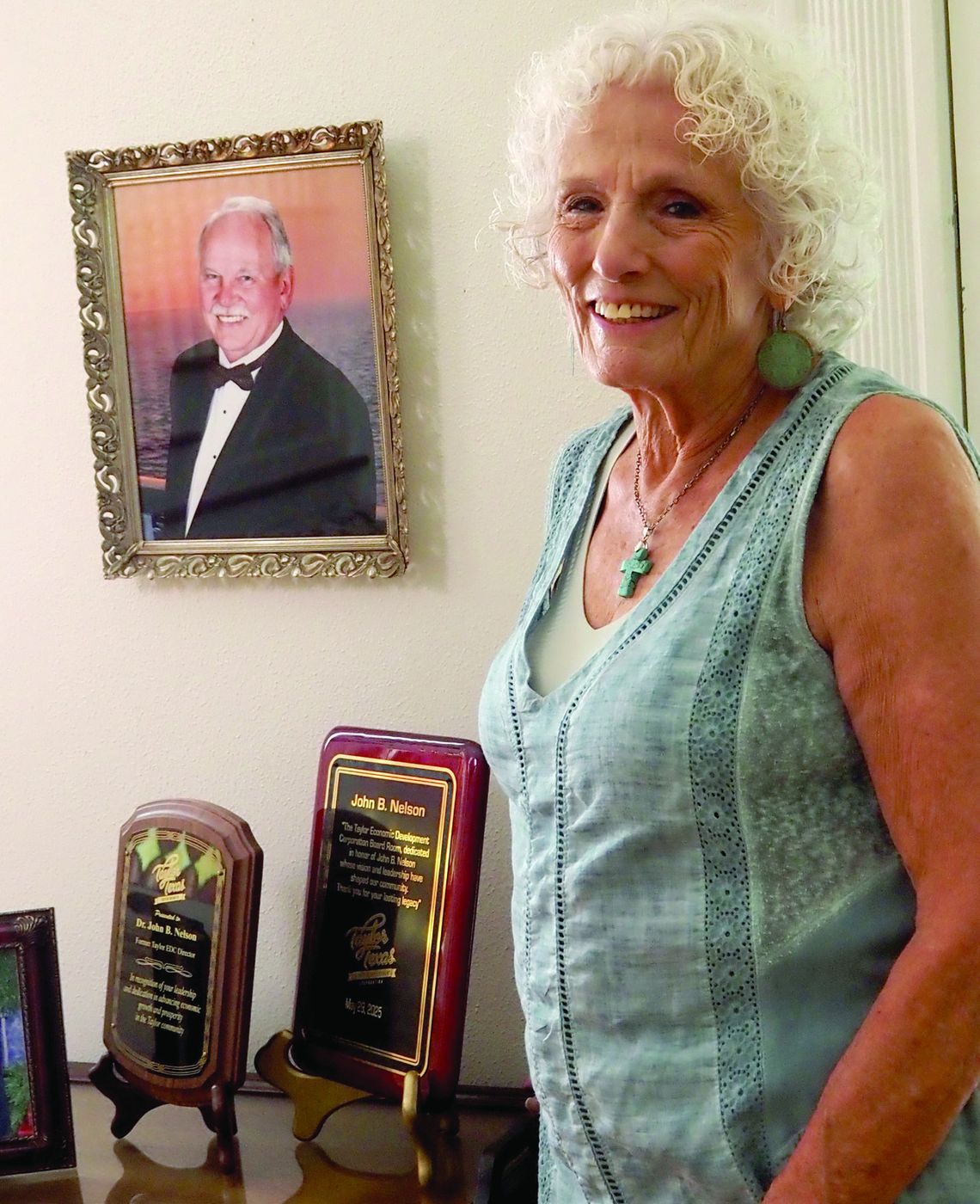
“John and I and the board, we were all so happy and proud,” said Hauser, the former federal programs director for the Taylor Independent School District who served on TCAT’s board for decades with Nelson.
She added, “I would say even above Samsung, it will impact generations to come. We always believed if you really want to change things, you have to start with education. It started with Temple College, but bringing UT to Taylor is the pinnacle of our vision.”
The planned campus is being called the University of Texas-Taylor Center, but its construction in a windswept field near Taylor High School is still a ways off.
Nelson, who died earlier this year, was an avid Longhorns fan who earned a doctorate in nuclear physics from UTAustin, established the Taylor Economic Development Corp., and served as its executive director for 14 years—among many other achievements.
In May 2024, the university announced plans to develop the land, which could eventually become a satellite campus housing several UT initiatives, including the Texas Institute for Electronics, or TIE, for semiconductor training and research, officials have said.
“We built a timeline into our agreement in which the university agreed to have the first shovel of dirt turned and the first building started by the year 2029,” said Hauser, TCAT’s president elect.
University of Texas officials said while the Taylor Center is still in the early stages, it promises to augment the various high-tech industries locating in eastern Williamson County.
“While planning efforts are ongoing for the land gifted to us in Taylor, UT-Austin values its engagement with the Taylor community, including its collaboration with Taylor (Independent School District) focused on (science, technology, engineering and math) education,” a university spokesperson said in a written statement.
Simultaneously, the university is also planning other major expansions, including a new medical center by the J.J. Pickle Research Campus in North Austin, and refurbishing the former site of SEMATECH, a research and development-oriented nonprofit composed of U.S. chip manufacturers, on Montopolis Drive in Austin, according to reports.
“I think this is going to take a little bit of time for it to come to fruition,” said TCAT board member Louis Hughes. “So my expectation is you are not going to hear anything in the next six months as this is a long-term process. But the really
“(University of Texas-Taylor Center) will be the building block for industries coming to Taylor for many years to come.”
— BEN WHITE, TAYLOR ECONOMIC DEVELOPMENT CORP.
good news is now Taylor is on the map, and it is in that UT ecosystem, so as opportunities become available, we are more visible.”
Former Taylor Mayor Brandt Rydell said the partnership with UT will cement the region as a place of economic prosperity and vibrancy.
Rydell was a key player in bringing Samsung and its initial $14 billion investment to Taylor in 2021 and played a supporting role in the UT agreement.
“Samsung certainly changed Taylor’s economic trajectory, but what UT represents is a way to help ensure that the people of Taylor and future generations will be able to share more fully in the transformation that is at hand,” he said.
The former mayor added, “The ultimate measure of Samsung’s success isn’t the dollars that are invested or the buildings constructed, but whether the people who grew up here have meaningful opportunities to participate in the economy that has been created around them and these educational avenues that are opening up for kids sitting in classrooms here in Taylor.”
Ben White, the current president and CEO of Taylor EDC, agrees.
“UT is arguably the flagship institution of the state of Texas in our community,” White said. “This strengthens our national and international brand for future residents and employers alike.”
He added, “This project brings world-class secondary education to our community and continues the legacy that John Nelson and others established many years ago. This will be the building block for industries coming to Taylor for many years to come.”
Hauser said the TCAT Foundation initially had purchased the tract of land in 2007 to serve as the site of the East Williamson County Higher Education Center, which now offers post-secondary learning and workforce development in partnership with Temple College, Texas State Technical College and Texas A&M University Central Texas — but the deal fell through.
“The EWCHEC ended up in Hutto instead of Taylor, and we ended up with the land but no college,” she said. “We could not know then that it was the best thing that could have happened to us. But when we signed the agreement, we now see why we didn’t get it.”
Indeed, Hauser said she and her late husband shared a belief this partnership with UT is a blessing from above.
“My firm belief is that people can take your money and your jewels, but the one thing that they can never take from you is your education,” Hauser said. “We gave that land to UT knowing that the gift will benefit not only this generation but all the future generations to come in Taylor and the Central Texas area.”
Comment
Comments