
TECHNOLOGY
FLIGHT OF THE FLOCK Cities migrate away from license-plate cameras
Automatic license plate readers have been in use for decades. The advent of artificial intelligence has given the technology a boost, allowing private networks to amass billions of digital images that can track vehicles across the country.
The technology recently has come under heavy fire in Central Texas, based on the discovery that those in charge of the system don’t always know who is using – or sometimes abusing – it.
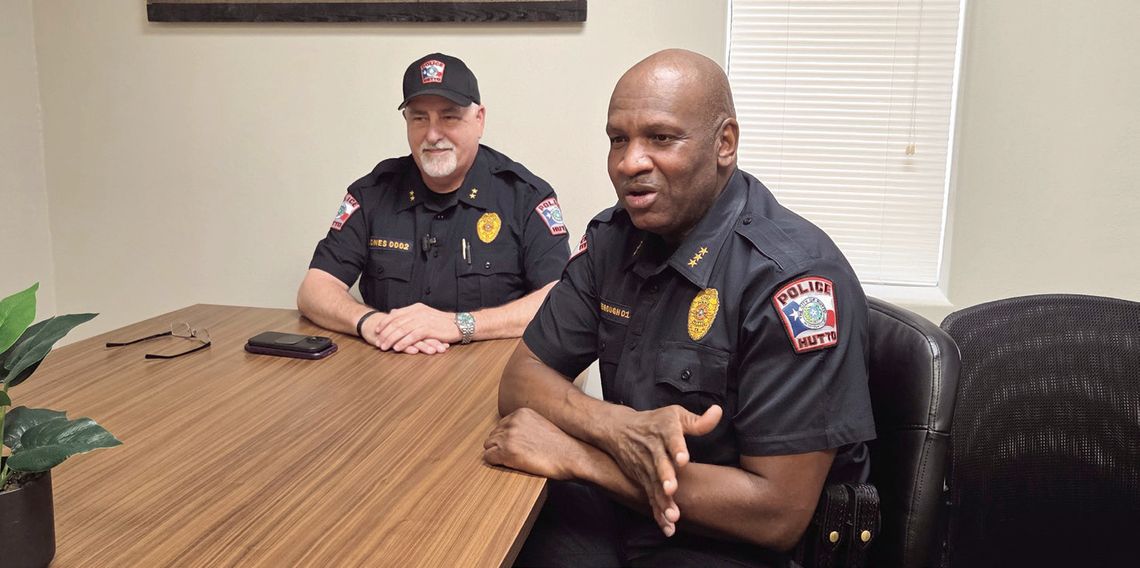
“We can police a lot of things, but how do you police AI?” said Hutto Police Chief Jeffrey Yarbrough, who ordered Flock Safety ALPRs deactivated in his city in August.
The concern over local ALPR cameras hit high-alert status in August when a concerned resident asked for an audit of Pflugerville’s Flock cameras. The audit revealed 459 outside agencies had accessed the city’s data, though only 83 had been given city authorization.
These agencies conducted more than 1.6 million searches of Pflugerville data.
The Pflugerville City Council quickly moved to cancel its contract with Flock, and the Pflugerville Independent School District followed suit.
The ensuing snowball effect included Bandera, Bastrop, Elgin, Leander, Manor and Burnet and Kendall counties shuttering their cameras. Austin had cancelled its Flock camera contract in 2025.
The Williamson County Sheriff’s Office ended its use of Flock technology on Aug. 31 and does not own any Flock cameras, according to Public Information Officer Phyllis Shaffer.
The Department of Public Safety did not stop use of its 900-plus live automated license plate reader cameras, but Gov. Greg Abbott has prohibited any additional use of taxpayer funds for ALPR readers.
DPS has paid $11 million for the cameras using funding provided by the Motor Vehicle Crime Prevention Authority established by the Legislature, a department spokesperson said.
The MVCPA is funded by a 2023 law that adds $1 to Texas auto insurance policies and is meant to fight catalytic converter theft.
Taylor had not taken a stand on its Flock cameras at press time. The city has eight ALPR cameras at four locations in town.
“We have been engaged with our community to discuss their continued use in the city of Taylor, and are currently evaluating their use and effectiveness, balancing those considerations with their effect upon public trust,” said Executive Director of Community Services Daniel Seguin. “These considerations include when the records should be accessed, both internally by staff and externally by other agencies, and the evaluation is ongoing.”
Flock is not the only provider of the cameras, but is one of the most commercially successful.
BALANCING RESULTS WITH RISK
Flock Safety responded to a request for information by referring to its Frequently Asked Questions page on FlockSafety.com and sending a link to a local news report of a violent crime spree earlier this year that ended with help of ALPR cameras.
The incident involved three teenage suspects who fired shots in 12 locations across Austin, injuring four people. After hours successfully evading capture in Austin, the suspects crossed into Manor where their vehicle was picked up on the Flock system and they were apprehended within an hour. Manor has since ended its agreement with Flock.
In addition, Flock representatives have also noted the company has added extra safeguards to the information its servers store and disseminate to police.
The cameras have proven to be a useful investigative tool for local law enforcement, aiding in missing persons and fugitive cases as well, according to Yarbrough.
Earlier this year in Hutto, police made an arrest in a homicide using the Flock system to identify a suspect’s vehicle based on a partial license plate number from a witness.
“Had we not had the Flock cameras and our detectives not used that technology to locate the vehicle, determine the direction of travel, determine sites and locations where this vehicle could be found and frequented, it would have been pretty much next to impossible to solve that case,” Assistant Police Chief Dwain Jones said.
Jones added the use of the ALPR network has allowed Hutto officers to locate people who have warrants filed
I see the product being refined and repackaged in a way to where we as law enforcement can use that valuable tool to solve crime without having the potential data loss or data breach.”
— JEFFREY YARBROUGH, HUTTO POLICE CHIEF against them while the suspects are in their vehicles, a safer alternative to showing up at a home where there may be unknown weapons and potential hostages.
In spite of documented results, Manor canceled its ALPR contract with Flock on Sept. 3 and Hutto ended its agreement Sept. 17.
Hutto took down its 10 Flock cameras in August after Yarbrough began hearing concerns from the community. While the council voted to cancel the city’s contract with Flock for the ALPR cameras, Hutto maintains its contract with the company for video monitoring on city properties.
“Flock is a valuable tool. But the concerns of our officers, the concerns of our community, they’re valuable too,” Yarbrough said.
The top cop said his department had identified and closed several security gaps before they launched the system, but the city could not control how partner agencies accessed the overall system.
CANCELED CONTRACTS DON’T CANCEL SURVEILLANCE
Law enforcement agencies are front and center in the ALPR backlash, but they are not the only users of the technology. In fact, other surveillance network clients may be even less accountable to the public and have fewer restrictions on how they use gathered data.
Homeowners associations are a large target market for ALPR purveyors. Big box stores including Home Depot and Lowe’s utilize ALPR cameras. Vehicle repossession and debt collection firms use the technology. License plate readers are also part of the robust surveillance system found at many gas stations, according to Jones.
“You can’t go anywhere without being on camera,” Jones said. “There are certain convenience stores around here who have incredible surveillance systems in place that would blow most people’s minds, to be quite honest with you. I’m not saying it’s good or bad, but it’s out there.”
And the potential for what AI and technology can do is growing. Jones discussed a Dallas software vendor that offered a data system to Hutto PD which had the ability to view the GPS history of all cellphones within a building, from outside.
Jones said the amount of information the company could pull without any type of warrant was shocking.
Hutto did not purchase the software, but the fact that it exists means it is in use. And the use is not limited to law enforcement agencies.
Stemming the use of ALPRs doesn’t turn the tide on citizen surveillance. Doorbell cameras or Ring cameras are increasingly being organized into networks that can be accessed by law enforcement or other agencies. Software that locates a lost phone or tagged pet based on proximity to other cellphones in the area has been sold to the public for years.
That same software tracks its users more accurately than static cameras can.
Earlier this year, Taylor Police Chief Joseph Chacon had been looking into activating license plate reader technology that already exists in patrol car dash cameras, as well as a license plate reader built into a mobile speed limit trailer for the Police Department to set up around town and remind motorists of their acceleration.
The funding would have come from the MVCPA grant.
If approved, this would have taken LPR from static placement on poles to roving neighborhood streets. It was pulled from consideration by the council after the Pflugerville Flock camera misuse was reported.
POLITICIZING SURVEILLANCE
Resident surveillance has been a sore point for community advocates, with many saying it unfairly targets lower-income areas. Mobile LPR cameras give officers the ability to sweep license plate numbers in parking lots of restaurants and churches in the areas they patrol, as well as at political rallies.
Often lower-income areas are among those that have the highest police presence, critics said.
Taylor resident Carrie D’Anna frequently represents underserved communities in Taylor, including those with issues of mental health, homelessness and fixed incomes. She noted that many of the surveillance cameras within Taylor are in lower-income areas.
“I would like to see a lot more public assurance that (data from surveillance cameras) are being treated with the utmost privacy and respect. We’re expanding our abilities to surveil and there’s not a lot of assurance for the public of what that looks like and what the parameters around that looks like,” D’Anna told the Taylor City Council during a meeting regarding the MVCPA grant application.
Community advocate website HuttoTransparency.org recently published a record of Hutto’s ALPR data usage. The documents were obtained through a Freedom of Information Act and founder Daniel Arenas said the redacted works cost $540 and were largely incomplete.
The request was for 20 months of records, but eight months were missing.
The records provided by HuttoTransparency.org showed the breadth of the privacy challenge facing local law enforcement agencies. While Hutto police performed more than 3,300 searches over the 12 months of records provided, 5,291 agencies across 47 other states performed an additional 11.9 million searches.
Yarbrough explained HPD has partnership agreements with neighboring communities, and those communities have other agreements and on and on, so that an authorized user in Maryland may simply “select all” when searching for a subject vehicle across the entire database including Hutto.
The chief said that is a component of the system local agencies cannot control.
Each search is supposed to be tied to a case file, but civil liberties advocates have noted searches are being done based on political agendas.
In Hutto’s documentation, outside agencies performed searches based on keywords “no kings protest,” “antifa” and “ICE pick up.”
Several incidents have been discovered where Texas law enforcement officers used the license plate reader system to stalk or harass people they know.
Many industry watchdogs believe the backlash against Flock is a momentary setback, and that once more safeguards are put into place, either through legislation or by the companies themselves, the technology will be back online, watching, logging and becoming part of the permanent digital history of every driver, stored in a data center somewhere in the world.
“In the future, I see them recognizing the gaps that exist, hearing the concerns of the public, hearing the concerns from law enforcement and closing those gaps to make that a solution that doesn’t have the potential for data bleed,” Yarbrough said. “I see the product being refined and repackaged in a way to where we as law enforcement can use that valuable tool to solve crime without having the potential data loss or data breach.”
To see a crowd-sourced map of reported LPR cameras nationwide, visit Deflock.org. To see whether your own vehicle has been part of an LPR search, visit haveibeenflocked.com.
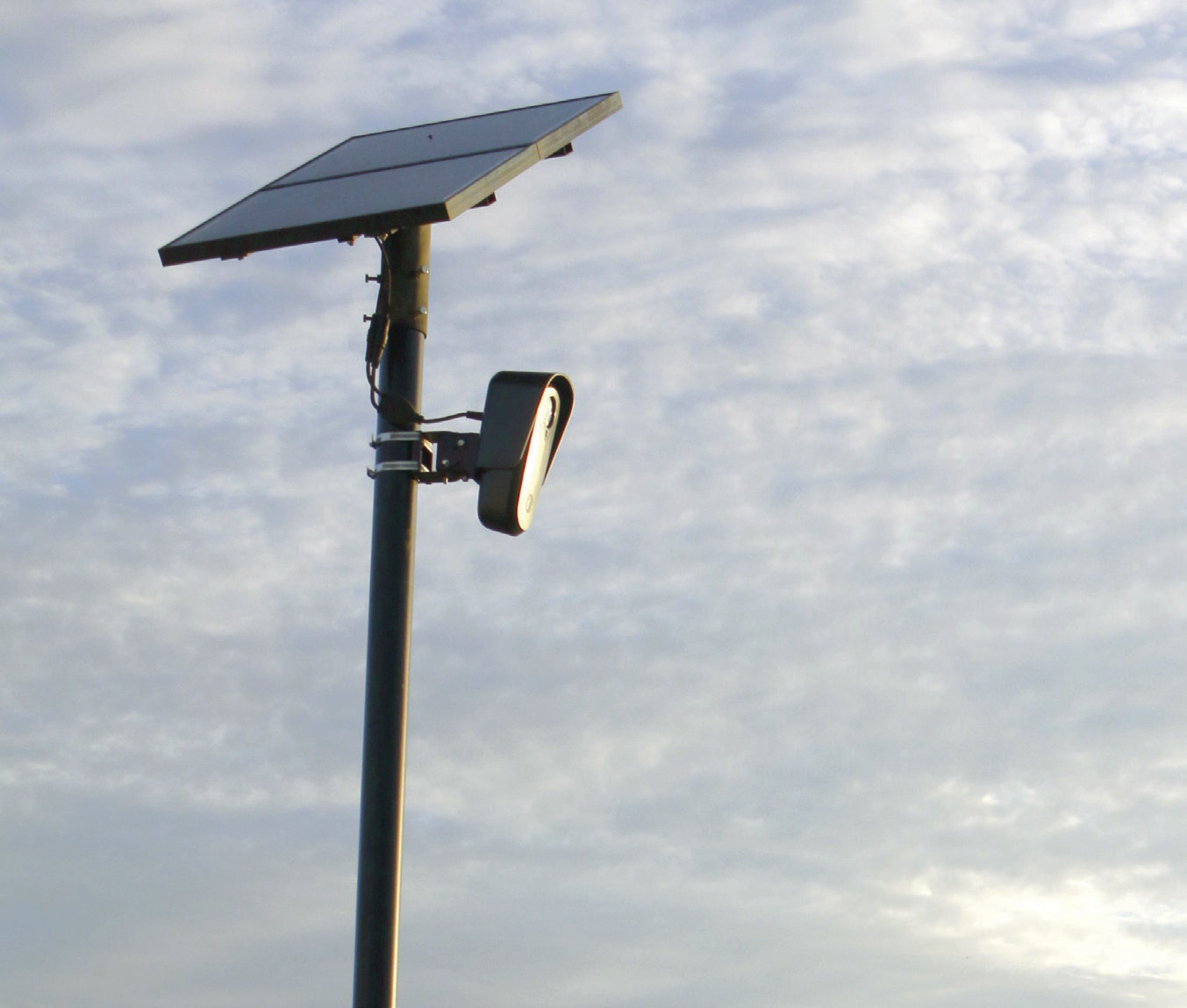
A Flock Safety camera keeps an eye on traffic near the railroad crossing on Main Street in Thrall. PHOTO BY EDIE ZUVANICH

Comment
Comments